ع



The Ministry of Environment, Water and Agriculture announced the 15-day campaign as part of its Environmental Awareness Initiative, involving specialized centers, government entities, private companies, nonprofit organizations and the public across all regions. A ministry statement framed environmental protection as a shared responsibility within an interconnected system that integrates roles to safeguard resources and maintain ecological equilibrium while advancing Saudi Vision 2030 and the National Environment Strategy. The drive seeks to unify awareness messaging and curb different types of pollution through coordinated national and community actions.
The campaign highlights seven core issues including wildlife and sustainable fishing, vegetation cover with habitat restoration, marine ecosystems featuring coral reefs and sea turtles, infrastructure impacts alongside environmental compliance, waste management with circular economy principles, weather and climate monitoring, and support for environmental solutions and financing, according to the ministry. It promotes responsible practices to protect natural, wilderness and coastal zones while underscoring the links between these environmental components. The ministry invited participation from educational institutions, businesses and individuals via digital platforms and field activities using the designated hashtag.
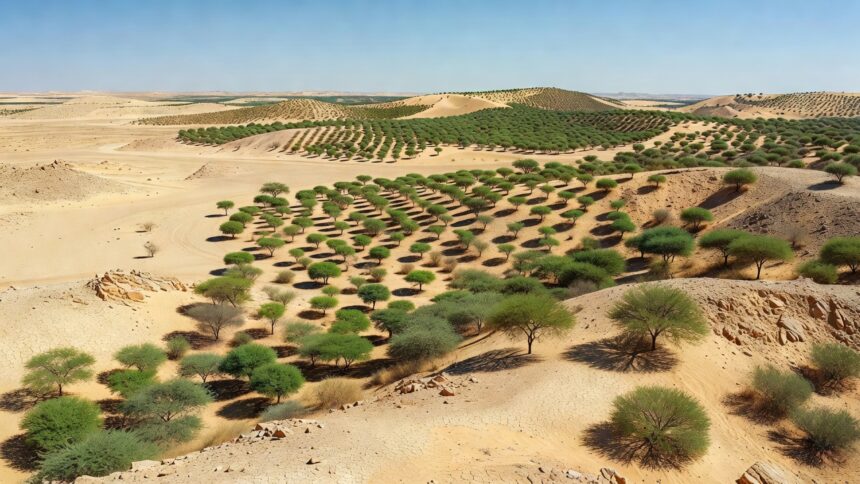
This latest initiative aligns with broader restoration work under the Saudi Green Initiative, where a Ministry of Environment, Water and Agriculture assessment in March placed the restored degraded land at 1 million hectares with more than 159 million trees planted. The National Greening Program, operating as the main implementing body, has employed methods such as reforestation, controlled grazing and wildlife reintroduction of species including the Arabian oryx, gazelles and ibex. Complementary techniques have included rainwater harvesting and treated wastewater reuse in water-scarce areas.
The United Nations recognized the National Greening Program as a World Restoration Flagship earlier in 2026 during a UNCCD conference, a multilateral body announcement that noted the program’s scale in rehabilitating land across reserves and national parks. Progress has accelerated from an initial 18,000 hectares at the program’s start to 250,000 hectares in 2024 before reaching the 1-million-hectare mark, the ministry reported. Targets call for 2.5 million hectares restored by 2030 on the path to a longer-term goal of 40 million hectares and 10 billion trees planted.
The October 2026 National Greening Season, the third since its inception, builds on prior seasons that rehabilitated more than 51,000 hectares and distributed 109 tonnes of seeds from 40 native plant species, according to the National Center for Vegetation Cover Development and Combating Desertification. This year’s season aims to restore an additional 60,000 hectares while promoting volunteerism and use of climate-suited species. Such efforts have yielded measurable benefits including a nearly 50 percent drop in dust storms in 2025 relative to historical levels, a ministry evaluation found.
Participation in the current campaign extends to all segments of society as the ministry stressed the need for collective action to sustain resources and achieve strategic environmental objectives. The focus remains on translating awareness into practical steps that reinforce ecosystem resilience across the Kingdom.