ع



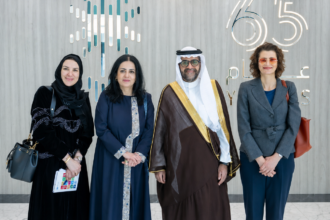
GCC Secretary-General Jasem Al-Budaiwi announced the signing of the general agreement during a ceremony held at Al Riffa Palace in Manama. The event was attended by Bahrain’s Crown Prince and Prime Minister Salman bin Hamad Al Khalifa together with transport and communications ministers from the six member states. The pact creates a common framework that governs obligations for project implementation, technical integration and cross-border coordination to align the regional network with national railway systems.
The GCC Railways Authority has reported that overall completion of the project has advanced to 55.9 percent. Full operations across the network are targeted for December 2030 in line with an approved work plan and timeline. This milestone builds on progress that stood at 50 percent as of May according to authority updates from that period.
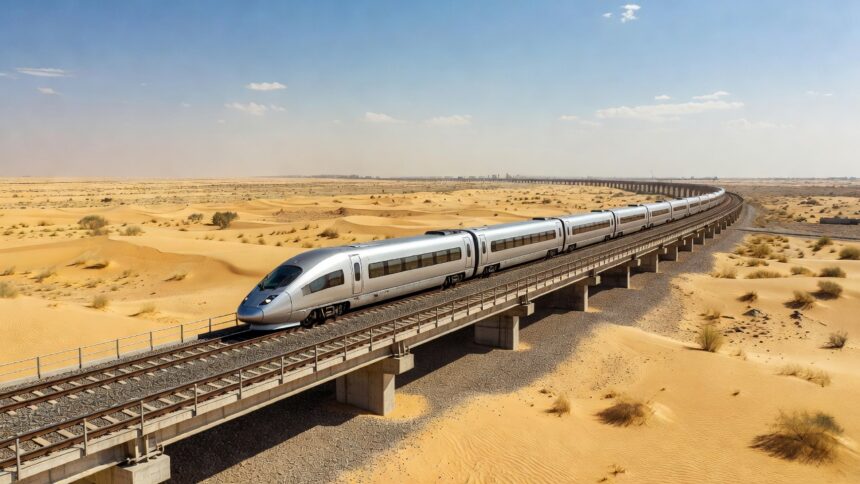
The planned 2,117-kilometer railway will connect Kuwait to Muscat in Oman while passing through Saudi Arabia, Bahrain, Qatar and the United Arab Emirates, according to the GCC General Secretariat. Passenger trains on the network are designed to reach speeds of up to 200 kilometers per hour with freight services operating between 80 and 120 kilometers per hour. The system will link to existing air, road, maritime and national rail infrastructure to provide an alternative for both travelers and cargo movement.
A GCC Railways Authority assessment projects passenger traffic to grow from 6 million annually in 2030 to more than 8 million by 2045. Freight volumes are forecast to rise from 200 million tonnes to 271 million tonnes over the same period. These increases are expected to support expanded intra-regional trade and supply chain efficiency across the bloc.
The initiative, first agreed upon by GCC states in 2009, has seen individual countries advance their domestic segments at differing paces over the past decade. Kuwait signed a design contract in April 2025 for its 111-kilometer section that will form the network’s northern terminus. The Riyadh-based GCC Railways Authority coordinates technical standards and implementation support among the member states to maintain alignment on the overall schedule.
Bahrain’s Minister of Transportation and Telecommunications Abdullah bin Ahmed Al Khalifa stated that the agreement would strengthen regional connectivity and create new opportunities for trade, investment and travel. Authority officials have previously noted that the railway will help localize industries tied to rail transport while generating employment through collaboration with national companies. The core infrastructure is estimated to cost between 15.4 billion and 16 billion dollars.