
 ع
ع


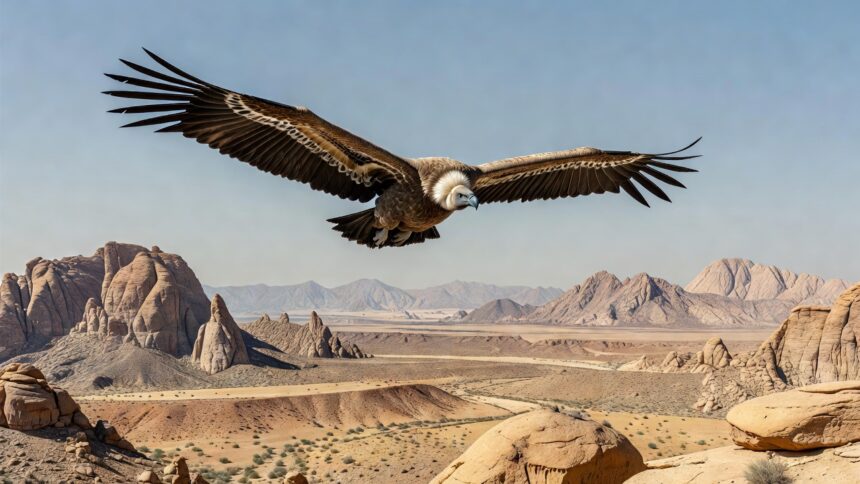
The Prince Mohammed bin Salman Royal Reserve detailed how two rehabilitated Eurasian griffon vultures fitted with satellite transmitters have yielded unprecedented insights into the species’ movements across the Middle East since their release on April 3, 2023. One vulture traveled 119,499 kilometers from the reserve in northwestern Saudi Arabia through Jordan, Syria, Iraq, Turkiye, Armenia, Azerbaijan and Iran before establishing itself in the mountains of Armenia and Azerbaijan. During its journey the bird returned to southwestern Saudi Arabia in the winter of 2023, passing once more through the reserve, and has endured altitudes up to 6,527 meters, speeds of 123 kilometers per hour and temperatures ranging from 9 to 54 degrees Celsius. The reserve collaborated with the National Centre for Wildlife on the rehabilitation and release to coincide with International Vulture Awareness Day.
A second vulture has flown 126,133 kilometers, first reaching Iraq where it attained a maximum altitude of 9,029 meters before settling in the Lesser Caucasus Mountains spanning parts of Turkiye and Iran after also crossing Jordan. The combined distance of 245,632 kilometers equals roughly six circumnavigations of the Earth in less than 30 months, according to data released by the 24,500-square-kilometer protected area. Satellite tags have supplied real-time information on migration routes, habitat utilization, stopover sites and congregation areas, marking the first such comprehensive study originating from Saudi Arabia. Reserve officials emphasized that individual vultures from the same population can display markedly different behaviors, with some migrating extensively while others remain more sedentary.
Andrew Zaloumis, chief executive of the Prince Mohammed bin Salman Royal Reserve, stated that this tracking data represents the first comprehensive study of Eurasian griffon vulture movements in Saudi Arabia and beyond. He added that the information provides real-time baseline data previously unavailable to conservationists and highlights the need for cross-border strategies to protect the species. Zaloumis noted that 16 of the world’s 23 vulture species are at risk of extinction, underscoring the value of such long-term monitoring for regional cooperation. The findings come as the reserve continues programs to rewild large migratory birds within an environment suited to nesting and roosting.
Vultures function as essential scavengers that consume carrion and help prevent disease outbreaks while supporting broader ecosystem health, a role the Prince Mohammed bin Salman Royal Reserve has sought to reinforce through multiple reintroduction initiatives. Earlier drone surveys by the authority confirmed active breeding colonies of the species within its sandstone mountains, with four nests documented alongside 37 additional potential sites under observation. The 2023 releases of these two rehabilitated individuals build directly on those discoveries by revealing how the birds interact with landscapes far beyond Saudi borders. Such efforts align with national strategies aimed at restoring biodiversity across varied habitats.
Ongoing transmitter signals continue to inform conservation planning by pinpointing critical areas that require coordinated protection among neighboring countries. The Prince Mohammed bin Salman Royal Reserve has integrated the tracking results into wider rewilding activities that have already returned numerous native species to the landscape. Officials indicated that the data will guide future management approaches tailored to the varied migratory patterns observed. This approach ensures that rehabilitation programs account for both resident and long-distance behaviors within the griffon vulture population.