

 ع
ع


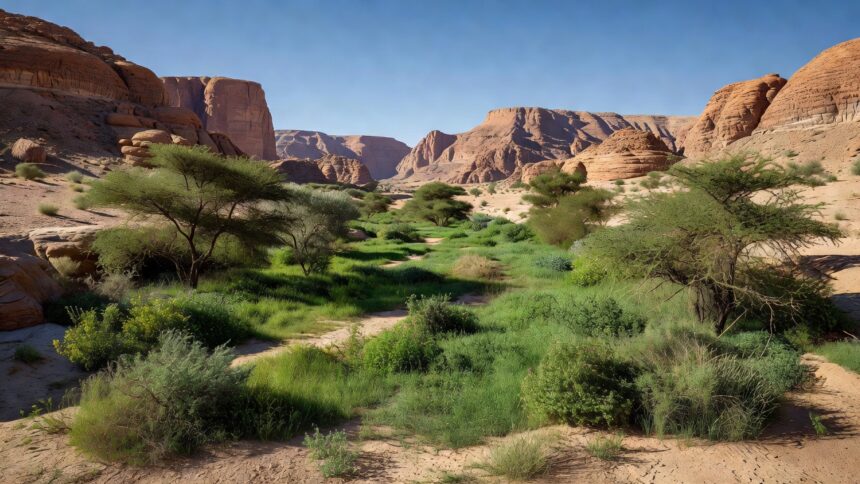
The Saudi Press Agency detailed how Wadi Qanat, one of Madinah’s largest valleys along with Wadi Al-Aqeeq, has experienced notable vegetation expansion recently. This development has transformed the landscape into a more inviting environment for various species. Local surveys indicate increased sightings of birds and other animals drawn to the area by abundant plant life. The growth includes a variety of native flora that support the food chain.
According to the National Center for Wildlife, protected areas in the Madinah region such as Sharaan Nature Reserve feature diverse plant species including Acacia and various grasses that sustain local fauna. The reserve is home to animals like the Arabian leopard, Nubian ibex, gazelles and Arabian wolf. Such habitats play a critical role in maintaining biodiversity within the kingdom’s western provinces. The center’s assessments show these areas are vital for species conservation.
A report from the National Center for Wildlife places the number of plant species in some reserves at approximately 88, with additional documentation of over 550 in others. Saudi Arabia maintains multiple protected zones spanning thousands of square kilometers across different terrains from mountains to deserts. These efforts have helped preserve unique ecosystems that support both resident and migratory wildlife. The Madinah initiatives align with broader national strategies for environmental protection.
Data from SaudiPedia indicates that the Sharaan Nature Reserve in al-Ula Governorate within Madinah Province includes red rock canyons, valleys and rocky plateaus that foster aromatic plants and native wildlife. The reserve adheres to international standards for habitat protection. This setup has contributed to the recovery of certain species populations in the area.
The FAO has noted that Saudi Arabia’s floristic provinces contain thousands of plant species, with significant diversity in the western regions including Madinah. Many of these plants are endemic and form the basis for wildlife habitats. Conservation programs focus on restoring natural areas to counter desertification and support ecological balance.
Observations shared in the Saudi Press Agency report suggest that the flourishing vegetation not only benefits wildlife but also enhances the natural appeal of Madinah’s parks for visitors. Park management continues to monitor the changes in biodiversity. Additional studies are expected to provide further insights into the long-term impacts of this vegetation growth.