
 ع
ع


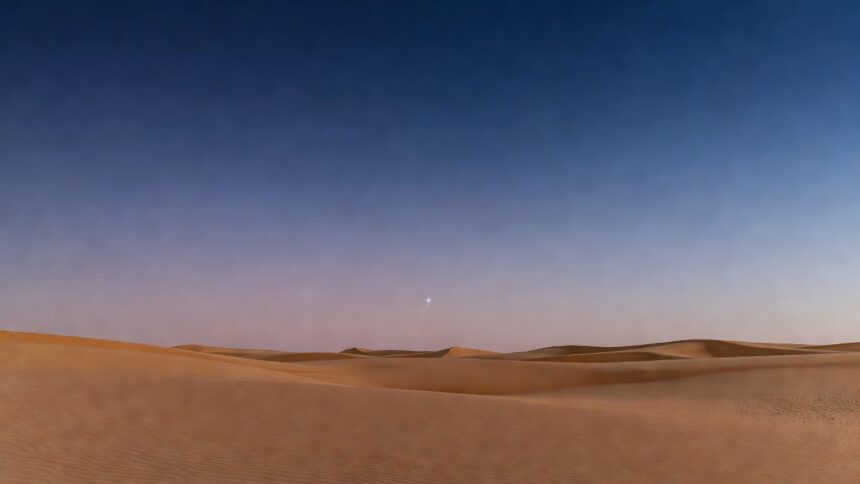
Majed Abu Zahra, president of the Jeddah Astronomy Society, stated that the rising of Suhail on the southern horizon at dawn on August 24, 2026, marks the beginning of a transitional phase in which the peak of summer heat starts to recede across the Arabian Peninsula. Nighttime temperatures will moderate gradually during this period while the angle of the sun’s rays shifts as Earth approaches the autumnal equinox, according to Abu Zahra. He added that Arabs in the past regarded the star’s appearance as a positive indicator coinciding with shorter days and falling temperatures toward the end of the night. The expert emphasized that this celestial event has long served as one of the most recognized seasonal markers in regional tradition.
Suhail, internationally known as Canopus, stands as the second-brightest star in the night sky after Sirius and sits roughly 310 light-years from Earth in the Carina constellation, Abu Zahra reported. The star holds a prominent place in Arab heritage, where its emergence has guided agricultural timing and travel for centuries across the peninsula. Its visibility is confined to areas south of 33 degrees north latitude, allowing residents throughout Saudi Arabia and neighboring countries to observe it low on the horizon before sunrise. Abu Zahra clarified that the star exerts no direct effect on weather patterns given its immense distance.
Regional astronomers have echoed similar assessments, with experts noting that noticeable easing in conditions unfolds over several weeks rather than immediately upon the star’s return. Historical meteorological records from 1991 to 2020 for areas in the broader Gulf show September average temperatures ranging between 29 and 39 degrees Celsius accompanied by humidity near 54 percent, illustrating the incremental nature of the seasonal adjustment. Such data underscores how the Suhail sighting aligns with the slow transition away from August’s more intense heat levels. The Jeddah Astronomy Society has highlighted the event as an opportunity to connect modern observations with longstanding cultural practices.
In popular Arabian reckoning the Suhail season extends for 52 days and divides into four segments of 13 days each beginning with Al-Tarfa followed by Al-Jabha, Al-Zubara and concluding with Al-Sarfa, whose name traditionally links to the easing of intense heat. Abu Zahra pointed out that the timing coincides with Earth’s axial tilt producing reduced solar intensity at these latitudes. This framework has helped communities anticipate shifts in farming, fishing and daily routines for generations. The society’s announcement drew on both astronomical calculations and inherited knowledge to frame expectations for the coming period.
Similar announcements have circulated in recent days from astronomy groups in the United Arab Emirates, where Ibrahim Al Jarwan of the Emirates Astronomy Society described the change as gradual with full moderation arriving later in the fall. Those observations align with Abu Zahra’s assessment that the star serves purely as a temporal marker rather than a causal force. Visibility improves in the first half of September as the star rises earlier and gains altitude before dawn under clear skies. Such coordinated regional commentary reinforces the cultural significance attached to the phenomenon.
The Jeddah Astronomy Society has encouraged public viewing from locations with unobstructed southern horizons and minimal light pollution to witness the event. Abu Zahra noted that the star’s annual reappearance after an absence of several months provides a reliable anchor in the traditional calendar used alongside meteorological forecasts. Its return precedes the autumnal equinox by approximately one month, completing the linkage between celestial positions and terrestrial seasons. This year’s timing falls squarely on the anticipated date of August 24 across central and southern parts of the kingdom.