
 ع
ع


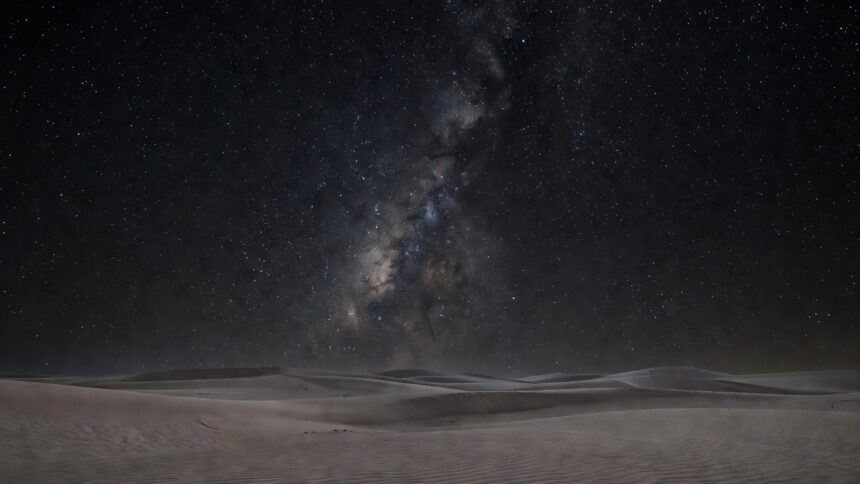
Majed Abu Zahra, head of the Jeddah Astronomy Society, explained that the hazy band stretching across the sky represents an edge-on view of the Milky Way galaxy. He noted that summer nights provide prime viewing opportunities directed toward the dense core filled with stars, gas and cosmic dust. The society indicated that the absence of moonlight over coming evenings will create especially favorable conditions for observers throughout the Arab world. Abu Zahra advised that locations remote from urban areas will yield the clearest results according to the society’s assessment.
The Jeddah Astronomy Society’s statement aligns with longstanding patterns of Milky Way visibility documented by astronomical resources. A Space.com article from 2014 outlined how summer months in the northern hemisphere allow the galactic plane to rise high overhead after dusk, enhancing naked-eye detection. That report emphasized that the galaxy appears as a faint glowing band rather than colorful structures seen in long-exposure photographs. Similar seasonal patterns apply to latitudes across the Arab region where evening skies turn sufficiently dark.
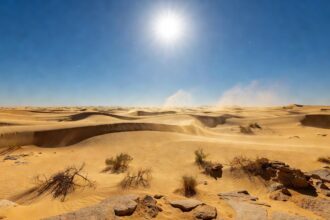
Regional deserts have drawn attention for their low light pollution that supports such observations. An Arab News report detailed how sites around AlUla in Saudi Arabia offer some of the world’s clearest night skies, enabling views of the Milky Way without telescopes. Experts quoted in that account noted that the absence of artificial lighting combined with dry air produces conditions where thousands of stars and the galactic band become apparent. The report added that winter also ranks highly for stargazing in those areas but confirmed strong summer prospects as well.
Further context on visibility requirements comes from aggregated astronomical data. Wikipedia entries on the Milky Way specify that eyes must adapt to darkness for roughly 30 minutes, light pollution must stay at Bortle scale 4 or lower, and moonlight must be minimal within about five days of a new moon. Those criteria indicate a limiting magnitude of +5.1 or brighter for the galaxy to appear, with greater detail at +6.1. The compilation notes that more than one-third of Earth’s population cannot see the Milky Way from home due to urban skyglow according to mapped artificial brightness data.
Dedicated dark-sky locations in the wider Arab region have been profiled in recent scientific coverage. A Phys.org article from May 2026 described the Al Quaa Desert in the United Arab Emirates as among the area’s darkest spots, where groups have used laser pointers to trace constellations against the Milky Way backdrop. That account illustrated how such environments minimize haze and humidity interference cited as additional factors for clear viewing. The profile reinforced that remote desert settings match the conditions recommended by the Jeddah Astronomy Society for August observations.
Public interest in these events often peaks alongside other August phenomena such as the Perseid meteor shower, whose peak aligns with darker skies. An Instagram post referenced in search results noted that every August the Perseids deliver heightened meteor activity visible to the naked eye under similar low-light conditions. While the society’s focus centers on the Milky Way itself, the overlapping calendar offers extended opportunities for night-sky engagement across the region. Multiple sources confirm that rural or desert sites away from cities consistently deliver the best results during this period.