
 ع
ع


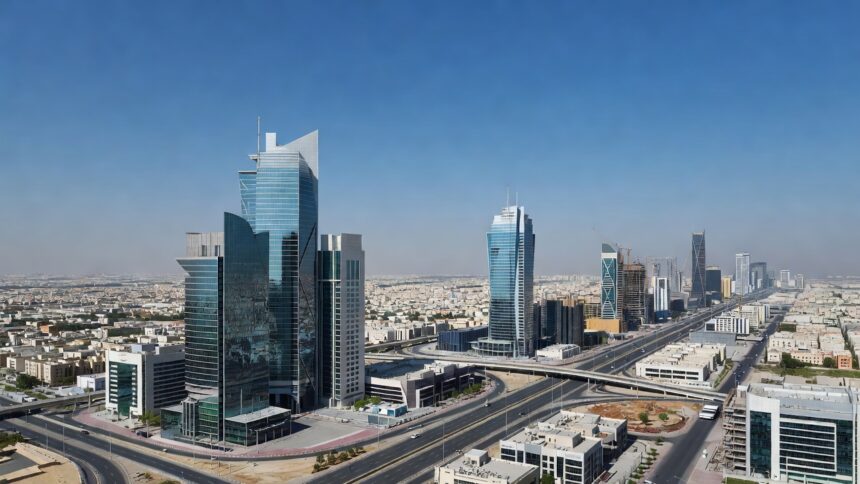
The Council of Economic and Development Affairs examined comprehensive reports on national economic performance and the progress of Saudi Vision 2030 during its latest session. According to the Saudi Press Agency, the Strategic Management Office presented an annual evaluation showing that 93 percent of performance indicators for the vision’s programs and national strategies have achieved or are nearing their annual targets. Several of those indicators have already surpassed interim benchmarks or the 2030 goals themselves. The council noted that the first and second phases of the vision have now concluded with 90 percent of the 1,290 total initiatives either completed or advancing as scheduled.
A separate assessment presented to the council highlighted gains under the vibrant society pillar. The Saudi Press Agency reported that the number of Saudi students studying at the world’s top 200 universities has more than doubled to 28,493. In addition, 22 Saudi universities appeared in the 2025 QS World University Rankings, including three institutions that entered the global top 200. The council reviewed these education metrics as part of broader human capability development efforts that have unfolded since the vision’s launch in 2016.
Under the thriving economy pillar, real GDP continued its expansion and exceeded the SAR4 trillion mark to reach SAR4.9 trillion by the end of 2025, the Saudi Press Agency stated in its account of the meeting. The council attributed the economy’s resilience to flexible policies and robust logistical infrastructure that helped maintain stable inflation amid global fluctuations. Earlier data from the Fiscal Sustainability Program, which concluded its executive plan last year according to a separate Saudi Press Agency release, showed non-oil revenues rising from SAR186 billion in 2016 to SAR458 billion in 2023.
The meeting also addressed tourism sector performance that has exceeded initial projections. The Saudi Press Agency reported that the kingdom welcomed 123 million tourists by the end of 2025, surpassing the original 100 million target and prompting an increase in the 2030 goal to 150 million visitors. Total tourism spending surpassed SAR300 billion as a direct result of vision-related projects. The council commended these outcomes while noting the sector’s contribution to economic diversification.
Completion of the Fiscal Sustainability Program and the Privatization Program drew particular attention from council members. According to the Saudi Press Agency, both programs met their established goals and have now handed implementation responsibilities to relevant ministries, authorities and other entities. The Privatization Program’s progress was detailed in a presentation from the National Center for Privatization and Public-Private Partnership that outlined several successful projects delivered in the second half of 2025. These transitions are expected to sustain the momentum built during the vision’s first decade.
Additional context reviewed by the council included sustained improvements in government performance tracked by the National Center for Performance Measurement. The Saudi Press Agency indicated that the center’s 2025 report documented stable positive trends across public agencies, reflecting enhanced implementation efficiency. Such measurements build on earlier benchmarks, including a drop in the national unemployment rate to 7.2 percent from 12.3 percent in 2016 as documented in separate vision progress reports. The council used the session to prepare accelerated steps for the vision’s third phase.