
 ع
ع


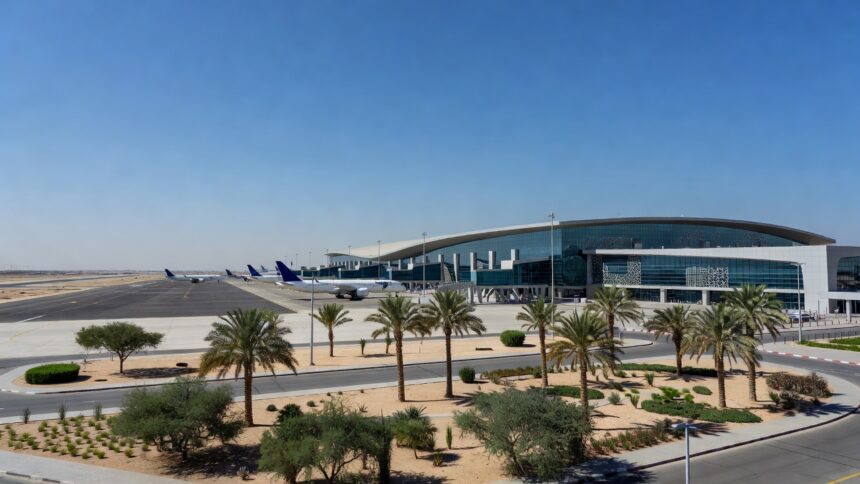
The twins, named Di Cecea and Jesipeli Kikau, who were born 10 months ago as part of a set of triplets that included their sister Hossana, reached King Khalid International Airport before transfer to King Abdullah Specialist Children’s Hospital in Riyadh. Their parents, Akeneta and Watisoni Vulimaiigiladi from Rewa, accompanied the girls on the journey after Fiji’s Ministry of Health provided a medical escort and coordinated with Saudi authorities. The family had sought overseas treatment since the premature birth at Suva’s Colonial War Memorial Hospital, with the Saudi offer providing full funding for the procedure, travel and accommodation after other countries demanded substantial upfront payments.
A statement from the King Salman Humanitarian Aid and Relief Center said the move followed directives from Custodian of the Two Holy Mosques King Salman and Crown Prince and Prime Minister Mohammed bin Salman. Dr. Abdullah Al Rabeeah, supervisor general of KSrelief and head of the Saudi Conjoined Twins Program’s medical and surgical team, thanked the Kingdom’s leadership for the humanitarian initiative that he described as a reflection of Saudi Arabia’s commitment to providing medical assistance to people in need regardless of nationality or background. He added that the program has become a global leader in treating complex cases due to the Kingdom’s humanitarian vision and expertise.
The Saudi humanitarian programme has assisted 152 sets of twins from various countries and performed 67 successful separations, according to details shared with Pacific media outlets covering the twins’ departure from Fiji. Specialists at the Ministry of National Guard Health Affairs facility will first conduct thorough evaluations to establish whether separation surgery is viable for the Fijian pair, whose conjunction type and overall health will guide any decision. This preliminary assessment aligns with the program’s established protocol for international cases referred for complex congenital conditions.
Fiji media reports, including from RNZ Pacific and 1News, indicated that the parents had approached multiple nations for assistance after the twins’ discharge from hospital eight months following their birth eight weeks premature. Three different countries reportedly requested one million US dollars in advance before agreeing to perform the surgery, prompting the family to accept Saudi Arabia’s comprehensive support package. The arrangement also covers the travel and stay for the full family group, allowing them to remain together during the medical process.
ABC Pacific noted that the conjoined twins’ case drew attention across the Pacific islands, where medical infrastructure for such rare conditions remains limited and often requires overseas referral. The Saudi program, which Dr. Al Rabeeah has led for years, maintains a multidisciplinary team experienced in preoperative imaging, surgical planning and postoperative care for separated children. Previous operations under the initiative have drawn patients from dozens of countries, building a repository of expertise that Pacific health officials cited when facilitating the Fiji referral.
The family conveyed gratitude to both Saudi leadership and the people of the Kingdom for the warm reception and swift organization of care upon arrival, according to statements relayed through local Fijian outlets. Their journey from Suva to Riyadh concluded a prolonged search for appropriate treatment that began shortly after the triplets’ birth at the Colonial War Memorial Hospital. Officials from Fiji’s Ministry of Health have continued to monitor the situation while urging community prayers for the twins’ successful evaluation and any subsequent procedure.