ع



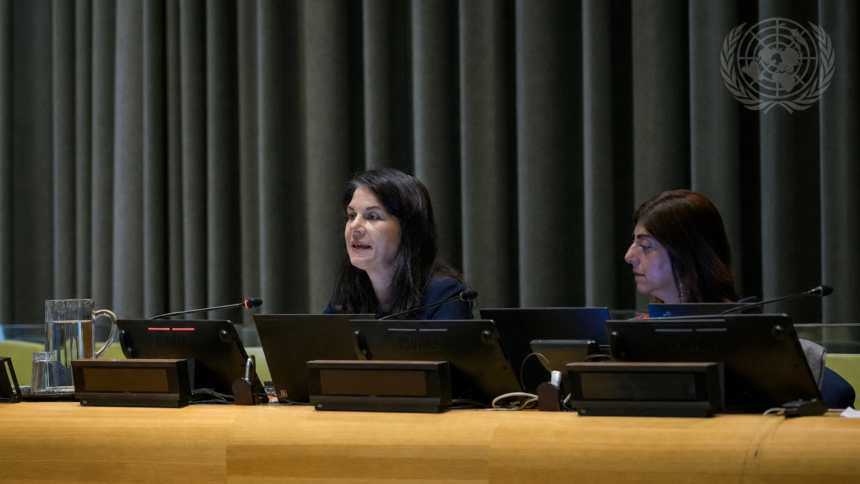
The Permanent Mission of Saudi Arabia to the United Nations delivered a statement at the General Assembly outlining the Kingdom’s long-held view that the Security Council requires urgent and comprehensive reform to reflect current global realities. In the address tied to agenda item 125 on equitable representation, the mission underscored the need for expanded membership that includes permanent seats with full powers for Arab states alongside proportional representation in non-permanent categories. Saudi Arabia has positioned itself at the forefront of nations advocating such changes to enable the council to better maintain international peace and security, according to the mission’s announcement shared via its official X account.
This intervention forms part of the ongoing intergovernmental negotiations on Security Council reform that have advanced through multiple plenary sessions in 2026, building on commitments in the 2024 Pact for the Future. A separate statement by the G4 nations delivered two days earlier noted that 119 member states back expansion in both permanent and non-permanent categories yet progress in the talks remains limited. The Saudi position aligns with broader calls from developing countries to correct historical imbalances that have left entire regions underrepresented since the body’s founding.
Saudi Arabia has consistently advanced these arguments in UN forums, including a 2018 open debate where its then-permanent representative told the Security Council that the majority of member states recognize flaws undermining the body’s credibility on issues such as the Palestinian question and the Syrian crisis. That earlier address, distributed by the Saudi Press Agency, highlighted proposals to boost elected members’ participation in drafting decisions and to adopt a code of conduct preventing obstruction of resolutions addressing genocide, crimes against humanity or war crimes. The Kingdom has also expressed support for the African common position on reform while seeking to address what it describes as an inequitable regional balance.
The Security Council’s five permanent members retain veto authority under the current framework, a tool invoked hundreds of times since 1945 that has frequently resulted in deadlock on critical files, according to UN tallies. Saudi Arabia has argued in past interventions that limiting veto application in cases of mass atrocities would restore functionality without eliminating the mechanism entirely. Such adjustments, the Kingdom maintains, would enhance the council’s legitimacy and effectiveness in a world far removed from the post-war order that shaped its original design.
Parallel statements in the same General Assembly debate saw China’s permanent representative urge priority attention to African demands and a rebalancing between developed and developing nations while the Uniting for Consensus group proposed increasing elected seats to improve accountability. These contributions reflect the wide range of proposals under discussion as the intergovernmental process seeks text that could command broad support among the UN’s 193 member states. Saudi Arabia’s latest remarks reaffirm its commitment as a founding UN member to collaborative efforts that strengthen multilateral institutions.