ع



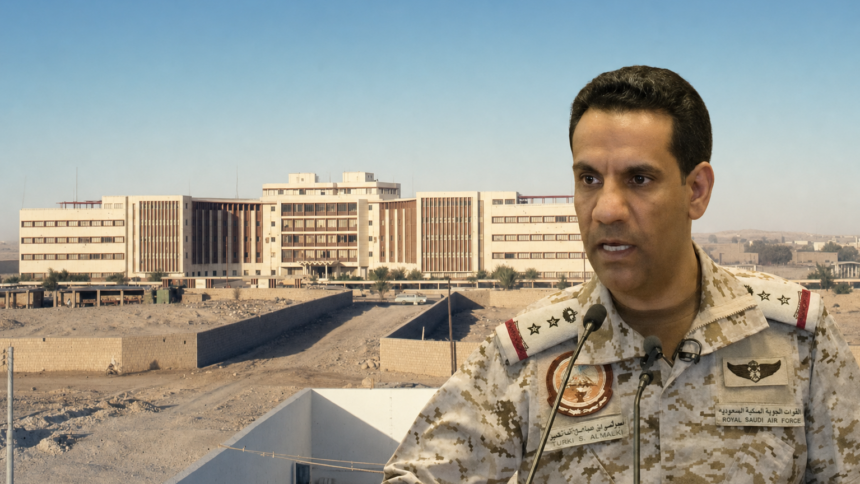
Major General Turki Al-Maliki, the official spokesperson for the Coalition to Restore Legitimacy in Yemen, announced that joint coalition forces intercepted and destroyed four UAVs fired by the Houthi militia toward Saudi Arabia. The statement, which the Saudi Press Agency carried on October 21, described the action as a response to deliberate attempts to target civilian areas and infrastructure. Al-Maliki added that the coalition remains committed to protecting Saudi territory from such threats in line with international norms.
A fifth UAV directed toward the Eastern Province was similarly intercepted and destroyed before it could reach its target, according to the same coalition statement. The spokesperson characterized the Houthi militia as a terrorist group backed by Iran that has repeatedly launched attacks on the kingdom. The announcement did not report any casualties or damage from the attempted strikes.
The incident forms part of a recent escalation in cross-border attacks, with the coalition reporting multiple interceptions of missiles and drones in the preceding weeks, a Reuters assessment of regional developments found. Earlier in October, coalition forces announced the destruction of ballistic missile launchers in Saada Governorate along with the interception of additional aerial threats, according to statements carried by the Saudi Press Agency. These events have occurred against the backdrop of intensified fighting in Yemen that has drawn in multiple regional actors.
Yemen’s Houthis denied any involvement in the launches, with their military spokesperson Yahya Saree stating that the group had not sent drones toward the Saudi holy city of Medina or conducted military operations toward Saudi Arabia, a Reuters report published on October 21 said. The denial came shortly after the coalition’s announcement and follows Houthi warnings to airlines about Saudi airspace. The group has previously claimed responsibility for strikes on Saudi airports and oil facilities while asserting exemptions for certain religious sites.
The broader conflict in Yemen dates to 2014, when the Houthis seized the capital Sanaa, prompting the Saudi-led intervention the following year to support the internationally recognized government, Reuters historical reporting has detailed. A UN-brokered truce in 2022 had largely paused direct cross-border attacks until recent weeks, when violence resumed as another dimension of wider regional tensions. The coalition has maintained that its operations target only military threats while seeking to deter further aggression.
Al-Maliki has issued similar warnings in prior statements, emphasizing that the coalition would continue necessary measures to safeguard civilians and civilian objects in accordance with international humanitarian law. The spokesperson’s October 21 remarks reiterated this stance without specifying further planned responses. Regional monitors continue to track the frequency of such incidents as both sides exchange claims and counter-claims over the attacks.