
 ع
ع


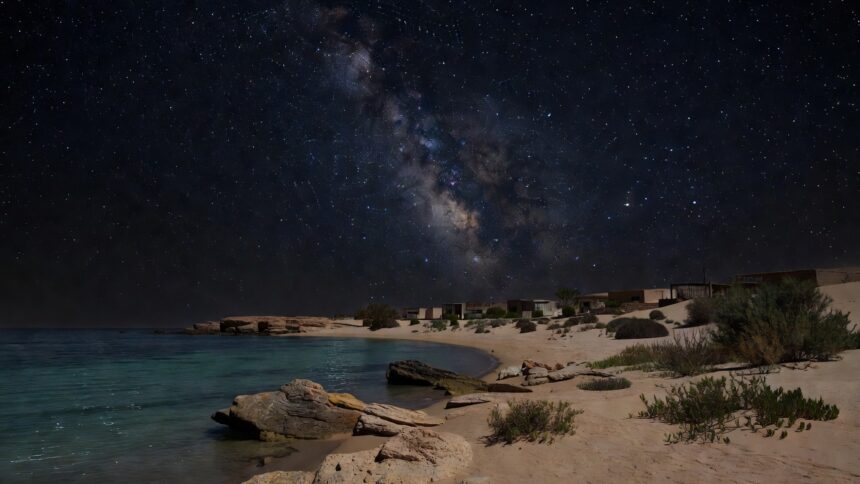
Red Sea Global has partnered with DarkSky International to establish the world’s first certification program tailored for resorts that minimize light pollution and preserve dark skies, with two flagship properties in Saudi Arabia becoming the inaugural recipients, according to a joint announcement. Desert Rock and Nujuma, a Ritz-Carlton Reserve, both located at The Red Sea, earned the designation after implementing extensive outdoor lighting controls that reduce energy consumption while supporting biodiversity in a sensitive marine environment. The program evolved from DarkSky International’s Approved Lodging initiative launched in 2023, as assessments of Red Sea Global projects revealed that larger resort operations required dedicated guidelines to address their broader lighting demands without compromising strict environmental criteria.
The certification mandates exceptional dark sky quality, thoughtfully designed lighting that limits glare and sky glow, and independent verification by DarkSky specialists, the developer said in the statement. By treating natural darkness as a core resource, the standard aims to maintain ecological cycles that many species depend upon for navigation, feeding and reproduction. Red Sea Global integrates these principles across all project phases as part of its regenerative tourism model, which seeks to restore rather than deplete the natural assets of the Red Sea coast.
DarkSky International estimates that at least 30 percent of all outdoor lighting in the United States alone is wasted through unshielded fixtures, resulting in $3.3 billion in annual costs and the release of 21 million tons of carbon dioxide. A study the organization has highlighted found that more than 80 percent of the world’s population lives under skyglow from artificial lights, a figure that reaches 99 percent across the United States and Europe. Such conditions disrupt wildlife behavior, with sea turtle hatchlings along the Red Sea coast proving especially vulnerable as they rely on the natural ocean horizon brightness to reach the water after emerging from nests.
Raed Albasset, group chief environment and sustainability officer at Red Sea Global, said in the announcement, “Red Sea Global is integrating responsible lighting into every stage of development to protect the ecological integrity of the night environment. Through our collaboration with DarkSky International, RSG is setting a new benchmark for regenerative tourism, demonstrating that preserving natural darkness not only safeguards biodiversity and ecological processes but also enriches the guest experience through world-class and authentic connections with nature.” The approach also enhances astrotourism opportunities, allowing visitors clearer views of the Milky Way and celestial events that have grown increasingly popular worldwide.
Ruskin Hartley, CEO and executive director of DarkSky International, said in the statement, “Red Sea Global’s commitment to sustainable, DarkSky-friendly design created an opportunity to evolve our Lodging program. Together, we developed resort-specific lighting best practices that recognize the unique needs of larger hospitality destinations while upholding DarkSky’s rigorous standards for protecting the night.” The collaboration has produced a consistent framework that other developers can adopt, potentially expanding certified sites beyond Saudi Arabia. Red Sea Global currently operates 15 resorts across three destinations and plans to extend DarkSky compliance to additional properties as they open.
The initiative aligns with broader global efforts to address light pollution’s impacts on both nature and human well-being, according to DarkSky International data. Responsible lighting not only cuts energy use but also supports the ecological balance that underpins regenerative tourism models in pristine coastal zones. Certification under the program provides travelers with a recognized marker for destinations that meet international standards for environmental stewardship and night sky quality.