
 ع
ع


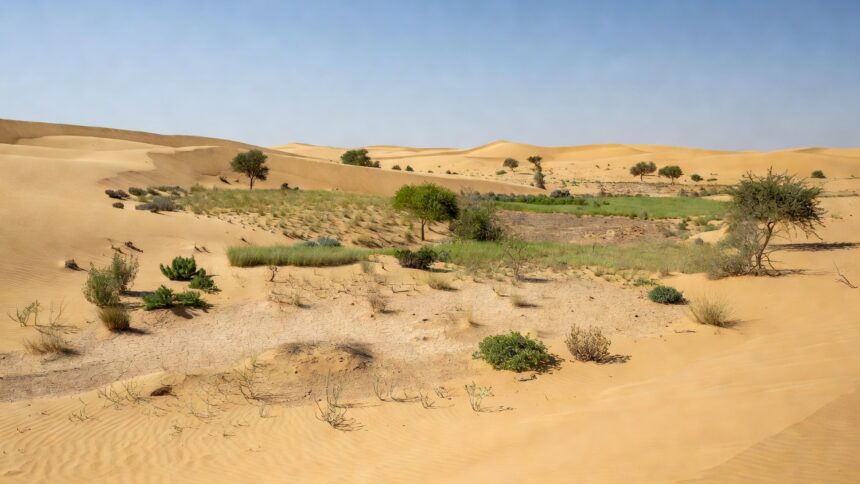
The National Center for Vegetation Cover Development and Combating Desertification is conducting the workshops in partnership with Kuwait’s Environment Public Authority through September and October to build expertise in addressing land degradation. Sessions will cover remote sensing technologies for identifying degraded areas, field survey techniques, and economic as well as social methods for evaluating land conditions. The program will also examine the establishment of green belts to limit sand encroachment and review Saudi Arabia’s approaches to managing invasive plant species along with outcomes from those initiatives, according to the center.
This initiative implements a memorandum of understanding approved by decree in 2024 that creates a framework for bilateral cooperation on environmental protection and rehabilitation under the laws of both nations. The agreement encompasses vegetation development, combating desertification, biodiversity protection, climate change adaptation, and emergency response to environmental incidents among other fields, the FAOLEX database shows. A joint working team with equal representation from each side will coordinate programs, information exchanges, and expert visits to advance shared objectives.
The National Center for Vegetation Cover Development and Combating Desertification has set targets to rehabilitate more than 2.5 million hectares of land and plant 215 million trees by 2030 as part of longer-term goals to restore 40 million hectares and plant 10 billion trees overall. The center received a United Nations award for its global models of land reform after restoring nearly one million hectares, reintroducing native wildlife species, and establishing governance frameworks to tackle drought and degradation. These national efforts support ecosystem resilience in arid regions while contributing to Saudi Vision 2030 priorities on sustainability.
The workshops seek to strengthen policy development, improve decision-making tools, and promote ecosystem conservation through collaborative technical knowledge. They reflect the center’s emphasis on expanding regional partnerships to enhance methods for assessing and reversing land degradation. Such training aligns with broader international commitments under the United Nations Convention to Combat Desertification that both countries pursue.
Bilateral environmental coordination between Saudi Arabia and Kuwait has intensified since the memorandum’s approval with a focus on practical measures that address shared challenges in the Arabian Peninsula. The two sides have agreed to exchange studies, technical resources, and best practices while protecting intellectual property from joint projects. This virtual series translates the agreement into direct capacity building that benefits experts and policymakers from both nations.
Participation in the program is expected to foster unified strategies that reduce the impacts of desertification on local communities and economies. The National Center for Vegetation Cover Development and Combating Desertification has highlighted how these sessions advance global climate action alongside national sustainability targets. The collaboration underscores ongoing work to sustain natural resources through integrated management and innovation.