ع



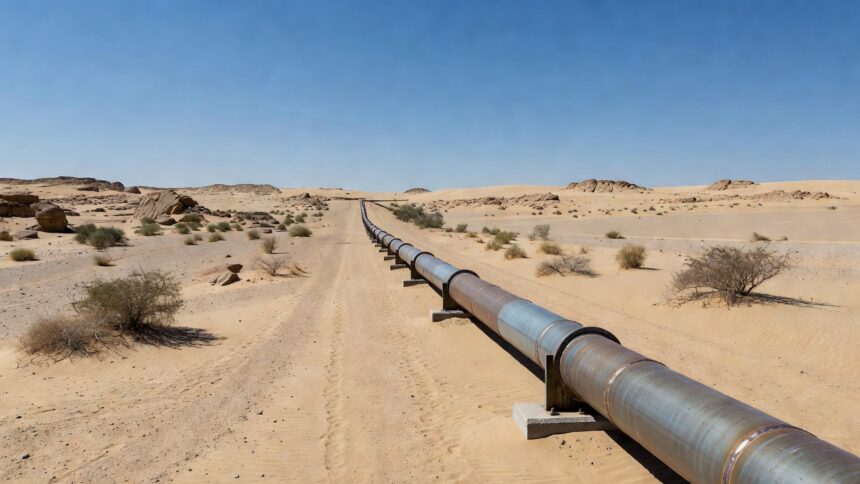
An official source at the Saudi Ministry of Energy stated that the East-West Pipeline in the Riyadh and Madinah regions was subjected to multiple attacks on the morning of September 10. The ministry said the conduit was shut down as a precautionary measure while the attacks resulted in a number of injuries and medical care was provided to those affected. Emergency and specialised technical teams responded immediately after the strikes, taking necessary measures to secure the pipeline and assess its safety in line with approved procedures. The actions were carried out in coordination with relevant authorities, according to a statement the ministry released through the Saudi Press Agency.
The Ministry of Energy indicated that any further developments regarding the incident would be announced in due course. Bloomberg reported that the pipeline serves as a key alternative route bypassing the Strait of Hormuz, which has assumed greater significance amid recent regional tensions. The ministry’s Friday statement on X reiterated that the shutdown followed established emergency response plans without providing specifics on the length of the closure.
The East-West Pipeline links oil production facilities in the Eastern Province with the Red Sea port of Yanbu and has a maximum capacity of 7 million barrels per day, a level reached after conversion of accompanying natural gas liquids lines in March 2026, according to an Oil and Gas Middle East assessment. Saudi Aramco operates the 1,200-kilometre conduit, which was commissioned in 1981 and typically supplies refineries in Yanbu as well as export terminals. Reuters data from prior coverage placed domestic use at roughly 2 million barrels per day, leaving the balance available for shipments to global markets.
Attacks on the same pipeline in April 2026 during the Iran conflict had cut throughput by about 700,000 barrels per day before the ministry confirmed full restoration to 7 million barrels per day on April 12, a Reuters dispatch at the time detailed. Those earlier strikes also affected production capacity at fields including Manifa and Khurais by a combined 600,000 barrels per day, the ministry said then. The latest incident occurs against a backdrop in which the pipeline has functioned as the kingdom’s primary crude export route when maritime passages face constraints.
The National published a satellite image that showed black smoke rising from an area of the pipeline south of Medina on September 10. Multiple accounts, including the ministry statement carried by the Saudi Press Agency, did not identify those responsible for the attacks. The National noted that responsibility for the strikes remained unclear as of Friday.
A similar drone attack targeted pumping stations on the East-West Pipeline in May 2019, leading to a temporary shutdown that Saudi Aramco described as a precautionary step to evaluate conditions, according to a contemporary company statement. That incident caused minor damage and no injuries or supply interruptions, the operator reported at the time. The 2019 event, claimed by Houthi rebels, prompted condemnation from Saudi officials who linked it to threats against global energy security.