ع



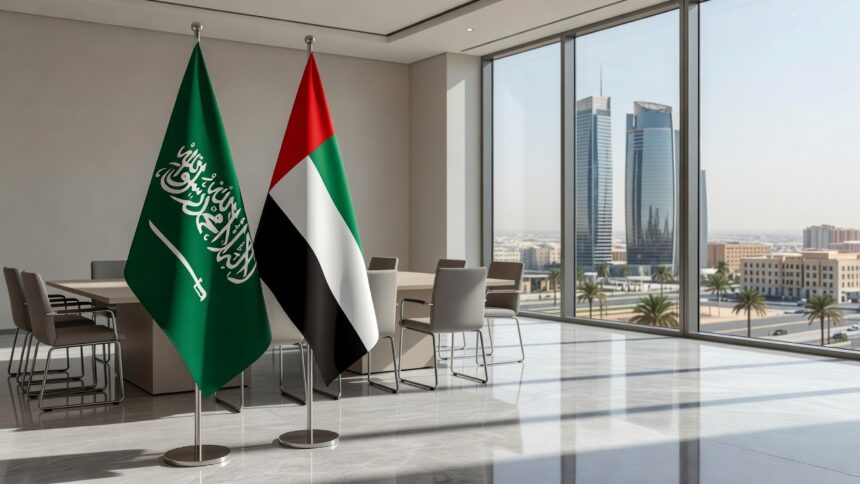
The Saudi Press Agency reported that the two ministers reviewed rapidly evolving events across the Middle East while stressing the value of aligning positions between Riyadh and Abu Dhabi. Their conversation highlighted the need to strengthen consultations as a means of supporting broader Gulf cooperation and protecting the security of GCC member states along with their national resources. The call reflects sustained diplomatic engagement at a time when multiple security challenges have tested regional stability.
According to the Saudi Foreign Ministry statement, both officials agreed that unified stances would help mitigate risks to shared interests amid ongoing volatility. The discussion built upon prior high-level contacts that have defined the close partnership between the two countries on foreign policy matters. Such coordination has become a regular feature of their bilateral relations in response to shifting dynamics.
Prince Faisal bin Farhan had spoken at the BRICS summit in New Delhi earlier on September 13 where he outlined Saudi Arabia’s view that de-escalation must take precedence over confrontation. He told the gathering that GCC states would not accept attacks on their territories, facilities or vital interests, the Saudi Press Agency reported. The minister added that lasting security depends on respect for sovereignty and good-neighborly relations.
Arab News reported that Prince Faisal held separate calls on September 11 with Turkish Foreign Minister Hakan Fidan and Qatar’s Prime Minister and Foreign Minister Sheikh Mohammed bin Abdulrahman Al-Thani to address similar themes of regional de-escalation. Those conversations similarly focused on diplomatic pathways to reduce tensions and promote stability across affected areas. The sequence of contacts demonstrates a consistent push by Saudi diplomacy to engage key partners.
The latest exchange occurs against the backdrop of recent drone attacks on Saudi Arabia’s East-West oil pipeline that caused injuries and material damage, according to statements carried by Arab News. Saudi officials traced the strikes to launches from Iraqi territory and accepted a request from Iraqi Prime Minister Mohammed Shia Al-Sudani to allow time for Baghdad to address the issue. The UAE Foreign Ministry separately condemned the assaults as a violation of sovereignty and voiced full solidarity with Riyadh.
The two ministers have conducted comparable discussions in recent months on subjects ranging from Yemen developments to wider Gulf security concerns, Asharq Al-Awsat noted in its coverage of the September 13 call. These repeated engagements underscore the depth of strategic alignment between the Kingdom and the Emirates on matters affecting their mutual interests. Continued dialogue is viewed as essential for formulating collective responses within the GCC framework.
The Saudi Press Agency indicated that both sides reaffirmed their commitment to ongoing coordination that safeguards GCC resources while advancing diplomatic solutions to outstanding regional crises. The call concluded with an understanding that further consultations would be maintained as events unfold. This approach aligns with the Kingdom’s broader diplomatic outreach that includes outreach to additional partners in the wider region.