ع



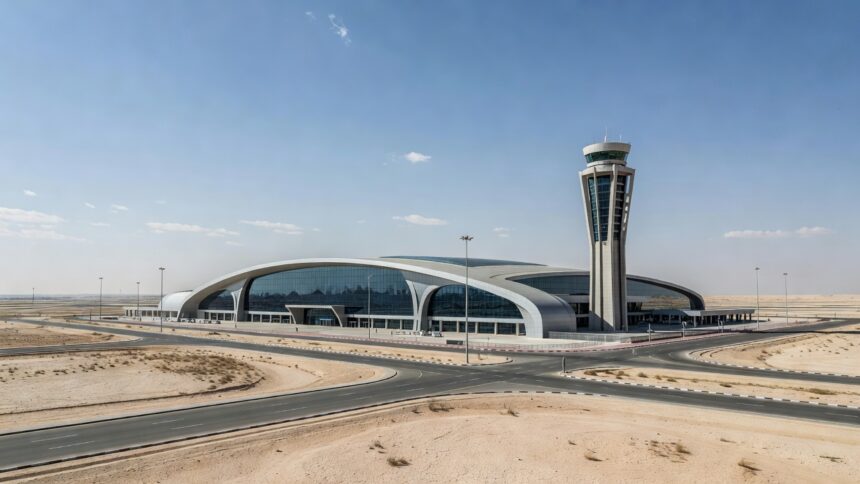
UN Secretary-General Antonio Guterres issued a statement on October 11, 2026, expressing deep shock over the Houthi attack a day earlier on King Khalid International Airport in the Saudi capital. He strongly condemned the strike that targeted a major civilian facility, noting that it had claimed multiple lives and left many more wounded. Guterres stressed in a post on X that such actions against civilians and civilian infrastructure breach international law and demanded their immediate halt. The UN chief’s remarks came as reports detailed significant casualties and operational chaos at one of the region’s busiest aviation hubs.
The Saudi General Authority of Civil Aviation reported that the October 10 assault resulted in 12 deaths, including four Saudi citizens along with two Bangladeshis and one national each from the United States, Egypt, Jordan, Syria, Palestine and Sudan. The authority’s statement added that 309 others sustained injuries, some of them critical, with all victims receiving treatment at area hospitals. Assessments of property damage from the strike were still under way, the General Authority of Civil Aviation indicated, while extending condolences to the families affected. These figures emerged from an official update released early on October 11.
Operations at King Khalid International Airport were temporarily suspended following the attack, according to the General Authority of Civil Aviation, as safety inspections and damage evaluations proceeded. Several international carriers adjusted or canceled flights to and from Riyadh in response to the closure, creating widespread disruptions for travelers. Kuwait Airways was among those that halted services, citing the airport’s status, while passengers received advisories to confirm schedules with their airlines before arrival. The suspension highlighted the attack’s immediate effect on regional air travel networks.
Guterres’ condemnation aligns with a series of international reactions that emerged on October 11, as multiple governments denounced the strike on the Saudi capital. The European Union chief characterized the incident as a dangerous escalation, while officials in Germany labeled it a terrorist act and their UK counterparts called it contemptible. Such coordinated statements underscored broader concerns over the targeting of civilian sites amid heightened regional tensions, with calls for restraint growing louder across diplomatic channels.
The attack forms part of an exchange of strikes between Houthi forces and Saudi targets that has intensified in recent days, according to reports from AFP correspondents in the region. Houthi military spokesman Yahya Saree warned airlines and travelers to avoid Saudi airports and airspace, stating that facilities could face further operations while exempting those in Mecca and Medina. The group indicated readiness for reciprocal measures to shield humanitarian infrastructure, even as Saudi authorities vowed a response to the Riyadh incident. This pattern reflects persistent friction tied to the wider Yemen conflict that has drawn repeated UN mediation efforts.
Earlier UN positions on Yemen have consistently urged de-escalation and protection of civilian infrastructure, a stance reiterated through Guterres’ latest intervention. The secretary-general’s office has long tracked violations in the cross-border exchanges, with data from UN monitoring mechanisms documenting multiple airport-related incidents since the start of renewed hostilities. Officials in New York have pressed all parties to prioritize dialogue, warning that continued attacks risk deepening the humanitarian crisis affecting millions across Yemen. Guterres’ October 11 statement adds to a lengthy record of such appeals from the world body.