ع



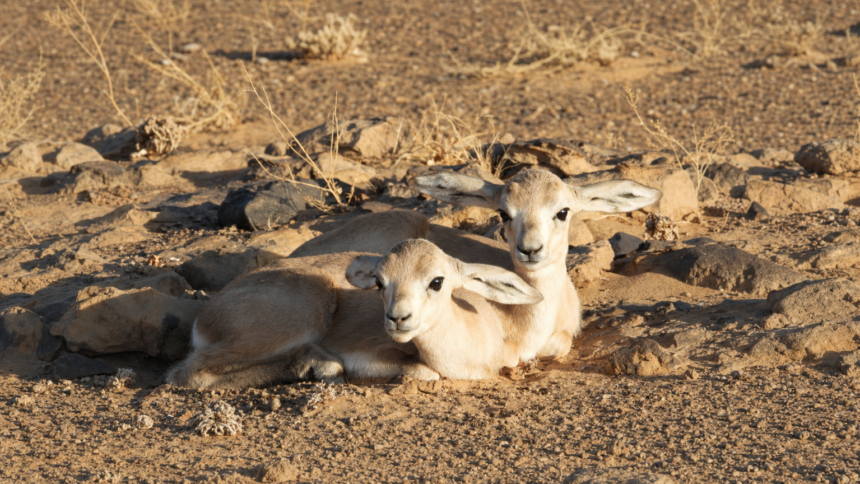
The Imam Abdulaziz bin Mohammed Royal Reserve Development Authority said in a statement distributed by the Saudi Press Agency that the 19 births took place across the Imam Abdulaziz bin Mohammed Royal Reserve and King Khalid Royal Reserve. The total included 16 Arabian sand gazelles along with two Arabian oryx and one Arabian mountain gazelle. The authority stated that these figures indicate the effectiveness of its programs to protect wildlife, reintroduce species and develop suitable natural habitats.
Abdullatif Al-Abdulwahab, head of the Wildlife Division at the authority, said the births were documented through continuous field monitoring and the deployment of specialized wildlife cameras. “These tools enable specialist teams to document breeding cases, monitor newborn animals, and observe species’ behavior in their natural habitats,” Al-Abdulwahab said. The monitoring systems provide teams with real-time data on reproduction patterns while minimizing interference with the animals.
Al-Abdulwahab added that the recorded births reflect continued natural breeding among wildlife in the two reserves and the availability of suitable environments for species to reproduce and survive. He stressed the importance of protecting natural habitats to support the stability of wildlife populations and enhance biodiversity. The authority has integrated camera traps and field surveys as standard elements of its wildlife management strategy.
The latest results add to an earlier total of 55 births that the authority documented by the middle of the second quarter of 2026, when nine Arabian oryx and 46 sand gazelles were recorded in the same reserves. That prior data came from coordinated reintroduction work with the National Center for Wildlife aimed at restoring population levels. Such partnerships have focused on releasing animals into protected areas where habitat conditions favor long-term survival.
The reserves form part of Saudi Arabia’s network of protected zones established to reverse declines in native ungulate populations that occurred due to historical overhunting and habitat changes. Arabian oryx, which were once extinct in the wild, have been reintroduced through dedicated programs that the authority has expanded in recent years. Camera monitoring has allowed conservation teams to track herd growth and identify key breeding sites across the vast desert landscapes.
Conservation data collected from these reserves informs ongoing habitat development projects that seek to expand available ranges for multiple species. The authority maintains active programs to monitor animal health, migration routes and resource availability within the protected boundaries. Teams continue to compile quarterly updates to assess progress toward population targets set for each reserve.