
 ع
ع


The Ministry of Education and Mawhiba announced Saudi Arabia’s first-place finish at the third International Nuclear Science Olympiad after four students collected medals including two golds at the event hosted by King Abdulaziz University. Amjad Mahmoud Issa Al-Darwish captured gold and the Nuclear Science Ambassador title for recording the highest combined score on the theoretical and practical tests. Jana Saleh Abdullah Al-Sabil also earned gold while receiving the Best Female Student award presented by the International Atomic Energy Agency, with Abdulaziz Abdulmohsen Al-Sharait taking silver and Saleh Mubarak Dhaifallah Al-Harbi winning bronze.
The competition that ran from August 2 to 9 in Jeddah drew 120 students and scientific experts from 19 countries under the theme Bright Minds for a Promising Future. Competitors completed two separate five-hour examinations that assessed knowledge of nuclear physics, chemistry, biology and radiation safety along with laboratory skills. According to the organizing committee the format focused on scientific reasoning and applied problem-solving rather than memorization.
Mawhiba coordinated the Olympiad with the Ministry of Education, King Abdullah City for Atomic and Renewable Energy and the host university after the International Atomic Energy Agency approved the event in 2024. IAEA Deputy Director General Hua Liu called the third edition an important milestone that is rapidly evolving into an inspiring global platform for young people. The gathering promoted peaceful nuclear applications linked to sustainable development goals in health, food security, water management and low-carbon energy.
Education Minister Yousef Al-Benyan stated that Saudi Arabia’s hosting reflected strong leadership support for education, research and innovation as a practical expression of Saudi Vision 2030 and the Human Capability Development Program. Dr. Anas Al-Wafi, chairman of the scientific committee, noted that the Royal approval and committee composition of local and international experts ensured the highest standards. Al-Wafi added that success should be measured by long-term impact on participants’ futures rather than medals alone.
Mawhiba data show the Kingdom has steadily increased its medal count across international science olympiads since earning a first gold at the International Junior Science Olympiad in 2018. The foundation’s records list dozens of silver and bronze awards accumulated in subsequent years across multiple disciplines. Saudi performance at the nuclear-focused competition builds on that trajectory while encouraging greater student interest in atomic science careers.
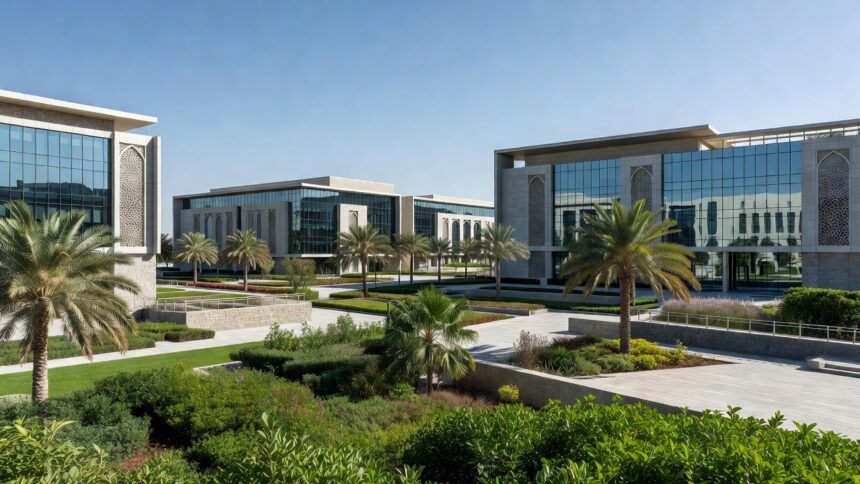
The organizing committee selected King Abdulaziz University as venue to capitalize on its academic heritage and alignment with the national atomic energy program. One earlier Saudi participant has since enrolled in nuclear engineering studies at a United States university, committee members reported. Organizers indicated that continued engagement in such events will strengthen Saudi Arabia’s role in the global nuclear science community.