 ع

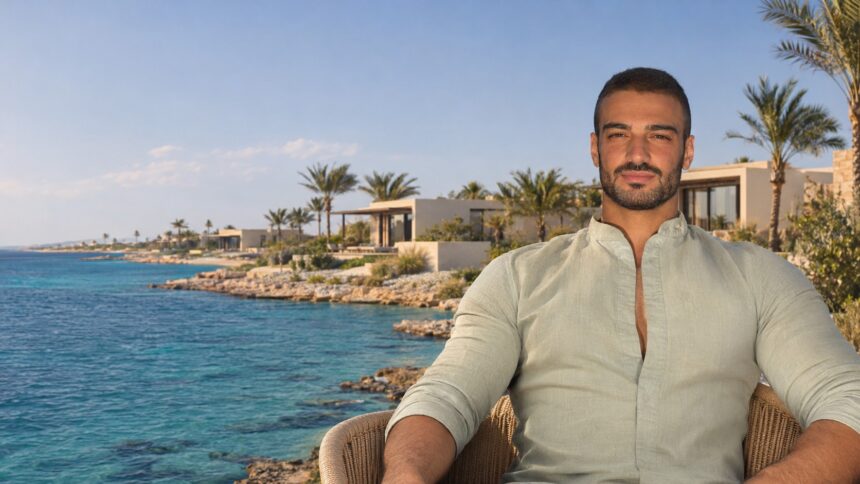
Shadaf’s agreement to sell Red Sea Global residences places the company within a shift from building Saudi coastal tourism destinations to establishing communities of homeowners.
Saudi Arabia’s Red Sea developments are becoming places to own a home as well as book a holiday. Sultan Alharbi’s Shadaf Real Estate has entered that residential market through an agreement with Red Sea Global, announced on 1 November 2026.
Shadaf says the partnership concerns selling residential units and connecting its investor and client network with opportunities on the Saudi coast. The move places the company on the sales side of a destination economy that now includes occupied homes alongside hotels and leisure facilities.
That distinction is becoming more tangible. Red Sea Global welcomed its first homeowners at SLS The Red Sea Residences in April, while property research identifies a wider pipeline of branded homes across Saudi Arabia.
A home within a destination
Shadaf’s partnership announcement describes a relationship focused on residential sales. It adds a coastal offering to a business led by founder and chief executive Sultan Alharbi.
The agreement’s significance is the connection it creates between a domestic property company and a destination developer. Shadaf is positioning its client relationships alongside homes within Red Sea Global’s portfolio.
This is one part of the residential supply chain. The developer creates the destination and housing offer; sales partners bring another route through which prospective purchasers can engage with it.
For the wider market, the important change is the emergence of property ownership within developments initially best known for tourism. A residential community introduces a longer-term relationship with a place than a hotel stay, even when owners use their homes periodically.
The first handovers change the picture
Red Sea Global’s 27 April 2026 announcement identified SLS The Red Sea Residences as Shura Island’s first completed residential community. The developer said it had welcomed the first homeowners and reported that 87% of the residences were sold.
That sales figure relates to the SLS community at the time of the announcement. It provides a dated reference point rather than a current sales rate for the entire Red Sea portfolio.
The development combines one- to four-bedroom beach villas with architecture by Foster + Partners and interiors by Lissoni & Partners. Red Sea Global also described concierge, security and property-management services as part of the ownership experience.
Those details explain what differentiates the offering from a standalone home. The residence sits within an operating hospitality environment, with services and shared facilities forming part of the surrounding community.
The handovers matter because they mark the transition from a proposed residential destination to homes with owners taking possession.
Saudi supply extends beyond the coast
Knight Frank’s Destination Saudi 2026 report identified 1,685 existing branded homes in the Kingdom and another 1,900 planned or under construction.
The report placed approximately 792 units in Riyadh’s development pipeline, scheduled for completion by 2028, and around 582 in Jeddah, due by 2030. Those are research-period estimates and delivery schedules, rather than completed additions to supply.
The figures put the Red Sea story within a broader national market. Branded residences are appearing in major cities as well as destination developments, with different locations serving different residential settings.
They also distinguish two measures that are easily confused: homes already available and homes expected from the pipeline. The latter indicates development intentions and projects in progress, while the former describes established supply.
Shadaf’s coastal agreement therefore sits within a sector that reaches beyond a single developer or destination. Its specific role is to connect clients with a part of that residential offering.
A regional market with different scales
Savills’ Branded Residences 2025/2026 analysis reported 187% growth in the Middle East and North Africa’s branded-residence sector over the preceding five years.
Within that analysis, Dubai accounted for 64 completed schemes and 87 in the pipeline. These are project counts, unlike Knight Frank’s Saudi figures, which count individual homes. They should not be directly compared as equivalent quantities.
The research nevertheless establishes a regional setting for the Saudi expansion. Branded residential property is already an established segment in parts of the Gulf, while new developments are adding locations and operators to the market.
For Saudi coastal projects, the question is no longer confined to how many hotel rooms will open. Residential offerings introduce another form of demand and a different relationship between the destination, its operators and the people who use it.
Shadaf’s agreement is a sales-side example of that developing relationship.
A company working across housing and hospitality
The November announcement followed Shadaf’s October agreements concerning residential development in Jeddah and potential hospitality investment.
Its 8 October memorandum with Kam Investment concerned exploring cooperation on property investment funds, hospitality projects and hotel management. The memorandum described potential areas of work, rather than a completed fund launch.
That provides context for the coastal sales agreement without treating every partnership as the same transaction. Exploring hotel investment and selling residences involve different responsibilities, but both connect property with the operation of hospitality assets.
For Alharbi’s company, the Red Sea relationship adds a defined residential-sales role. For the destination market, it illustrates a wider transition already visible in the first handovers on Shura Island: Saudi coastal developments are beginning to accommodate homeowners as well as hotel guests.