ع



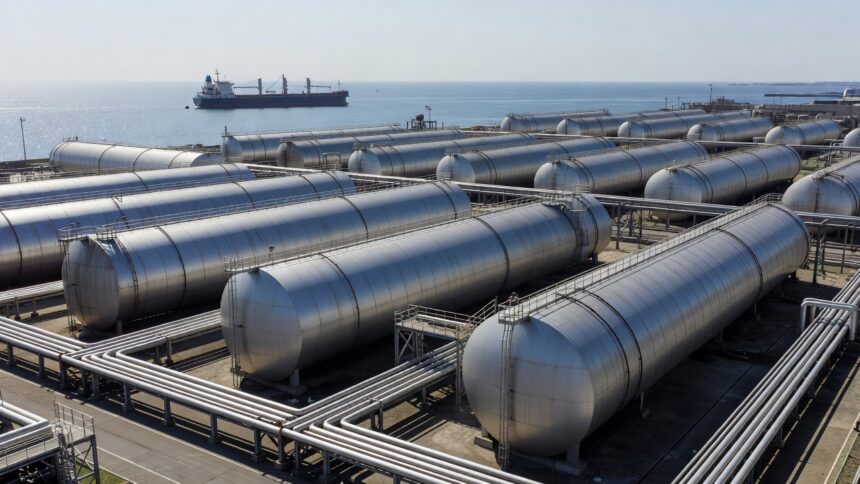
A joint statement published by the Saudi Press Agency on Friday outlined plans for Japan to offer Saudi Arabia 16 million barrels of additional oil storage capacity within its national facilities on a temporary basis. The arrangement builds on an existing 8 million barrel capacity, bringing the total to 24 million barrels, and comes after Saudi Arabia began replenishing the joint stockpiling tanks. The statement followed a virtual meeting on Nov. 9 between Saudi Energy Minister Prince Abdulaziz bin Salman and Japan’s Minister of Economy, Trade and Industry Ryosei Akazawa, during which the two sides reaffirmed their strategic partnership and discussed further energy cooperation.
The ministers confirmed the expansion during discussions held by a joint task force established in May, according to the Saudi Press Agency statement. Japan intends to purchase as much as 8 million barrels of Saudi crude for its national petroleum reserves, subject to favorable market conditions and internal approvals. Saudi Arabia regards Japan as a strategic partner and places importance on supporting the country’s long-term energy security with stable supplies, while Japan expressed appreciation for the kingdom’s reliable deliveries.
The joint crude oil stockpiling project between the two countries dates back to 2010 and demonstrated its value during recent supply disruptions, the statement noted. Both countries will cooperate under Japan’s POWERR Asia initiative to strengthen energy security across the region through better stockpiling infrastructure and coordinated emergency measures. The initiative aligns with the AZEC Ministerial Work Programme presented in October for developing institutional frameworks and working with oil-producing nations.
The International Energy Agency coordinated a release of 400 million barrels from member countries’ emergency stocks following the outbreak of the U.S.-Iran conflict in February. A Bloomberg report detailed how the accord reflects steps by major producers and consumers to bolster reserves after the war caused major oil supply disruptions. Stockpiles in consuming nations helped mitigate the impact during that period when tanker traffic through the Strait of Hormuz was severely restricted, the report added.
Saudi Arabia is pursuing expanded storage arrangements elsewhere in Asia, including planned crude storage in Singapore’s Jurong caverns set to begin in the second half of 2027. Aramco is studying the construction of major storage facilities around the world with a focus on Asian markets, industry assessments show. The kingdom’s existing storage capacity in Asia already exceeds 35 million barrels distributed across locations in Japan and South Korea.
Japanese officials announced the agreement with Saudi Arabia on Friday, confirming that the additional storage would triple the volume held under the producer-country joint stockpiling scheme. Similar arrangements exist with the United Arab Emirates and Kuwait, providing Japan with emergency buffers from Gulf producers. The latest deal follows regional visits and talks that accelerated efforts to expand such cooperation since May.