
 ع
ع


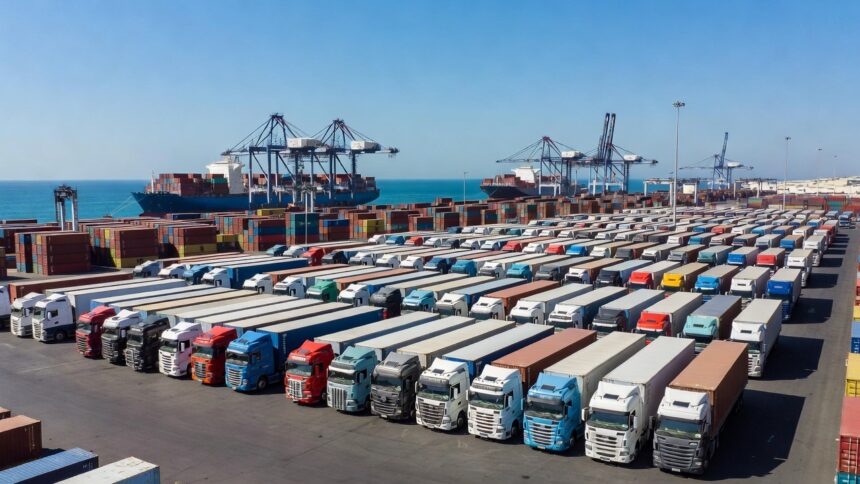
Saudi Ports Authority president Sulaiman Almazroua detailed the investment during the inauguration of the world’s largest truck marshalling logistics zone at Jeddah Islamic Port. According to Al Arabiya Business, Almazroua noted that the Minister of Transport and Logistic Services directed immediate preparations for the Kingdom’s western ports to receive diverted supply chains serving both Saudi and Gulf markets after the onset of the Strait of Hormuz crisis. The authority has prioritised four areas in its response, with the transport and logistics sector operating in an integrated manner to maintain smooth operations.
Mawani has strengthened maritime connectivity by adding more than 27 shipping services to western ports, the authority president reported. These additional lines provide a monthly handling capacity exceeding 200,000 containers and have enabled the western region to meet its own needs while offsetting shortfalls on the eastern coast. The moves have also helped support Gulf markets facing similar disruptions, Almazroua added in the account carried by Al Arabiya Business.
The International Energy Agency data from early 2026 places pre-crisis oil exports through the Strait of Hormuz at nearly 20 million barrels per day. A United Nations Conference on Trade and Development assessment issued in March described the military escalation that blocked shipping flows as generating widespread ripple effects on energy markets, maritime transport and global supply chains. Saudi authorities responded in part by maximising use of the East-West Crude Oil Pipeline to divert flows to Red Sea ports including Yanbu.
Almazroua explained that the SR640 million investment over the past three months forms part of broader efforts to increase port capacity and infrastructure on the western coast. The Saudi Ports Authority has focused resources on facilities such as Jeddah Islamic Port, where the new truck marshalling zone can accommodate up to 40,000 trucks daily and 2,700 vehicles simultaneously, according to Mawani statements from earlier in the year. These enhancements aim to reduce congestion and improve cargo flow amid heightened demand.
Pipeline capacity to bypass the strait remains limited relative to normal volumes, an International Energy Agency review found, with Saudi Arabia’s East-West system offering between 3 million and 5 million barrels per day of additional throughput depending on operational conditions. The 2026 crisis, which saw shipping traffic drop by roughly 90 percent in the strait according to multiple maritime reports, has already prompted production adjustments across Gulf producers. Mawani’s actions have sought to position western ports as a stable alternative for containerised and other non-oil trade.
The authority continues to monitor requirements for further capacity additions as the situation evolves, Almazroua indicated through the Al Arabiya Business reporting. Jeddah Islamic Port’s expanded landside capabilities, including the recently operational marshalling area launched in April, form a key element of the response. Support for regional markets has remained a priority throughout the three-month period of intensified investment.