ع



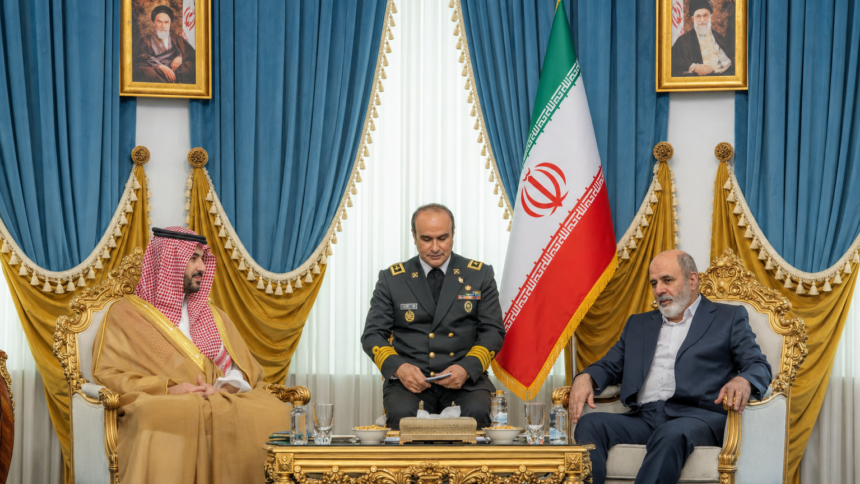
Saudi Arabia’s Defence Minister Prince Khalid bin Salman is leading his country’s delegation to Tehran on Monday for meetings under the framework of the Makkah Joint Defense Agreement with Iranian officials. The discussions are intended to promote de-escalation, dialogue and diplomatic solutions to the current regional crises, according to Saudi Deputy Minister for Public Diplomacy Rayed Krimly. Krimly posted on X that the visit also seeks to underscore the pivotal role of the agreement’s member states in restoring security and stability while collaborating with all nations in the region.
The delegation includes Pakistan Army Chief Field Marshal Asim Munir and Turkish intelligence head Ibrahim Kalin, who will join their Saudi counterpart in sessions with Iranian President Masoud Pezeshkian and Supreme National Security Council Secretary Mohsen Rezaei. This gathering represents the first joint high-level contact between the Makkah pact countries and Iran since the pact’s formation. Krimly noted that the engagement backs mediation efforts by Qatar and Pakistan.
The Makkah Joint Defense Agreement was signed in August by Saudi Arabia, Turkey and Pakistan, establishing that an armed attack against one would be considered an attack against all three. According to coverage of the agreement text, the pact’s first article stipulates that the parties shall use all necessary means to eliminate threats to one another’s territorial integrity, sovereignty and internationally recognised borders. This collective security arrangement was formed amid growing regional uncertainties.
Recent escalations, including intensified Houthi attacks on Saudi Arabia last month, have added urgency to the talks, a development reported across regional outlets. Munir had conducted a separate visit to Tehran only a week earlier. Iranian Deputy Secretary of the Supreme National Security Council Ali Bagheri Kani told state television that the participants could collaborate on establishing security from within the region.
Rayed Krimly’s statement frames the initiative as part of sustained efforts to prevent further expansion of the crisis. The deputy minister highlighted the importance of diplomatic avenues in addressing the complex challenges facing West Asia. Iranian officials echoed the focus on regional coordination to tackle issues like developments in Palestine and Lebanon.
The meetings occur against a backdrop of heightened rhetoric between Washington and Tehran as well as Israeli military actions. All parties have expressed interest in supporting mediation to rebuild trust and explore proposals for renewed negotiations. The discussions in Tehran are part of broader initiatives to ease tensions across the Middle East.