
 ع
ع


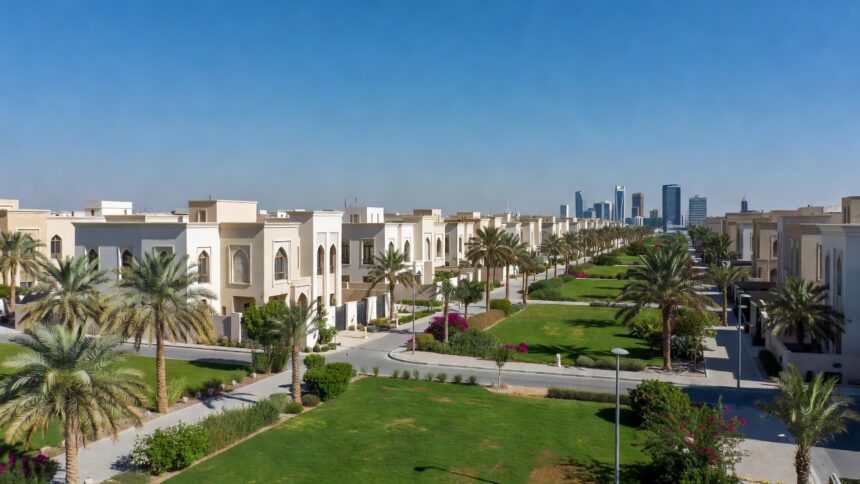
The Ministry of Municipalities and Housing placed the homeownership rate at 66.24 percent by the end of 2025 in an updated national report submitted to UN-Habitat. That figure marks a notable rise from 47 percent in 2016 according to Vision 2030 program records and follows incremental gains to 63.74 percent by the end of 2023 and 65.4 percent a year later as detailed in successive housing program assessments. Minister Majed Al-Hogail highlighted the progress during an address at a high-level United Nations meeting on the urban agenda in New York this week where he outlined the Kingdom’s integrated approach to housing and urban planning. The ministry’s data further shows that more than 25 percent of Saudi families benefited from housing support services between 2018 and 2025.
Housing initiatives have centered on the Sakani platform which the ministry said has enabled more than one million subsidized contracts since its introduction as part of the Vision 2030 Housing Program. These efforts eased access to financing streamlined regulatory processes and expanded options for Saudi families according to ministry announcements. The Real Estate Development Fund has played a central role in coordinating these measures which have collectively supported the climb toward a 70 percent homeownership target by 2030. Related regulatory enhancements have integrated private-sector participation to scale delivery of housing units across the Kingdom.
Public space per capita increased from 5.2 to 6.9 square meters as the ministry’s report documented while the Bahja program added more than 12 million square meters of community areas in urban settings. Transport infrastructure has expanded in parallel with the Riyadh Metro carrying more than 100 million passengers in its first nine months of operation and urban bus services recording more than 96.8 million riders during 2025. The minister’s presentation to the United Nations meeting tied these mobility improvements to broader quality-of-life gains that reinforce sustainable urban transformation. Such projects form part of a wider strategy that balances population growth with environmental considerations.
Women’s labor force participation rose from 22.8 percent to 36 percent while employment rates for people with disabilities have doubled according to indicators presented in the national report. The number of nonprofit organizations grew to more than 7,213 reflecting an increase of over 341 percent which the ministry linked to strengthened community engagement in urban development. These social metrics underscore the multifaceted impact of housing and urban policies that extend beyond ownership rates to encompass inclusive growth. The report submitted by Saudi authorities emphasized data-driven governance as a foundation for these outcomes.
Financial autonomy for municipalities has advanced alongside integration of urban data systems and incorporation of climate-risk assessments into planning processes the minister stated at the New York gathering. The Kingdom has implemented the Saudi Green Initiative and National Renewable Energy Program while concluding more than 56 public-private partnership agreements to support sustainable projects. Green and sustainable financing reached new levels with $9.1 billion in green bonds and sukuk issued in 2024 and the Public Investment Fund targeting more than $10 billion in green finance by 2026 according to the ministry’s disclosures. These instruments help align urban expansion with national environmental commitments.
Strategic cooperation agreements with UN-Habitat and the UNDP for the period 2024-2027 will provide additional technical support for Saudi urban initiatives the national report noted. The ministry reaffirmed the Kingdom’s commitment to the New Urban Agenda through ongoing international collaboration and knowledge exchange at the United Nations meeting. Al-Hogail described the Saudi model as spanning the full cycle from planning and implementation to measurable impact on residents and the environment. This comprehensive framework continues to guide policy adjustments as the country tracks progress against its 2030 benchmarks.