 ع
ع

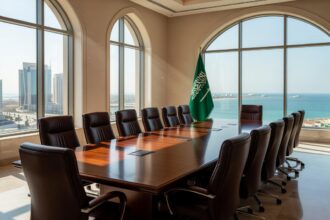
The Saudi Cabinet approved the State Revenues Law and a new training visa for international trainees at its session in Jeddah on Tuesday, according to an official statement from the meeting chaired by Crown Prince and Prime Minister Mohammed bin Salman. The training visa will be issued to international participants in line with a framework of regulatory arrangements that the cabinet endorsed simultaneously. A separate royal decree published late last year had already projected state revenues for the 2026 financial year at 1.147 trillion riyals with expenditures of 1.313 trillion riyals, leaving a deficit of 165.4 billion riyals that the new law is expected to help manage through improved collection mechanisms.
The State Revenues Law establishes clearer rules for the deposit of all public income into the unified treasury account at the Saudi Central Bank, the official statement indicated. Such measures align with ongoing fiscal reforms that have guided budget planning since the adoption of Vision 2030, which seeks to broaden non-oil income streams. The cabinet’s approval comes as Saudi Arabia continues to refine its financial legislation to support sustainable economic growth amid fluctuating global energy markets.
Introduction of the training visa forms part of broader efforts to attract skilled individuals and enhance knowledge transfer across key sectors, the statement added. The new category will allow international trainees to enter the kingdom under approved programs that complement recent memoranda of understanding signed with partners such as Canada on skills development and artificial intelligence cooperation. Public data from previous years show Saudi authorities have steadily expanded visa offerings to position the country as a regional hub for professional training and human capital development.
During the same session the cabinet reviewed several diplomatic files, including a phone conversation between the crown prince and U.S. President Donald Trump on bilateral ties and regional stability, according to the official readout. Updates were also provided on high-level talks with Canadian Prime Minister Mark Carney that led to agreements covering energy, investment in artificial intelligence and the creation of a joint coordination council. The cabinet welcomed associated investment forum outcomes that produced deals in mining, infrastructure, education and information technology between Saudi and Canadian entities.
Regional security matters dominated parts of the discussions, with the cabinet condemning attacks on commercial shipping in the Strait of Hormuz and reiterating opposition to actions that threaten neighboring states including Kuwait, Bahrain, Qatar, the United Arab Emirates, Oman and Jordan. The statement welcomed Iraq’s renewed assurances that its territory would not be used for launches against Saudi Arabia or other Gulf Cooperation Council members. It also expressed support for the U.S. move toward removing Syria from its list of state sponsors of terrorism while stressing the importance of rebuilding Syrian institutions.