
 ع
ع


Abdullah Alswaha, speaking at the opening of LEAP East 2026 in Hong Kong, credited the leadership of King Salman bin Abdulaziz Al Saud and Crown Prince Mohammed bin Salman bin Abdulaziz Al Saud with building one of the world’s most accessible and AI-ready digital infrastructures. The minister characterized LEAP, which launched in Riyadh five years ago, as a global technology movement that has produced a multiplier effect across Saudi Arabia, the region and internationally. According to Alswaha, the initiative has helped position the Kingdom as a trusted partner in the digital economy.
The minister pointed to the East as a $34 trillion economy representing nearly 30 percent of global GDP along with a $10 trillion digital economy, while its 3.7 billion people account for about 46 percent of the world population. He added that the region generates 82 percent of global AI patents, holds 60 percent of the semiconductor market and produces 90 percent of the world’s advanced chips. These attributes make the East a dominant force in computing and artificial intelligence, Alswaha stated during his remarks.
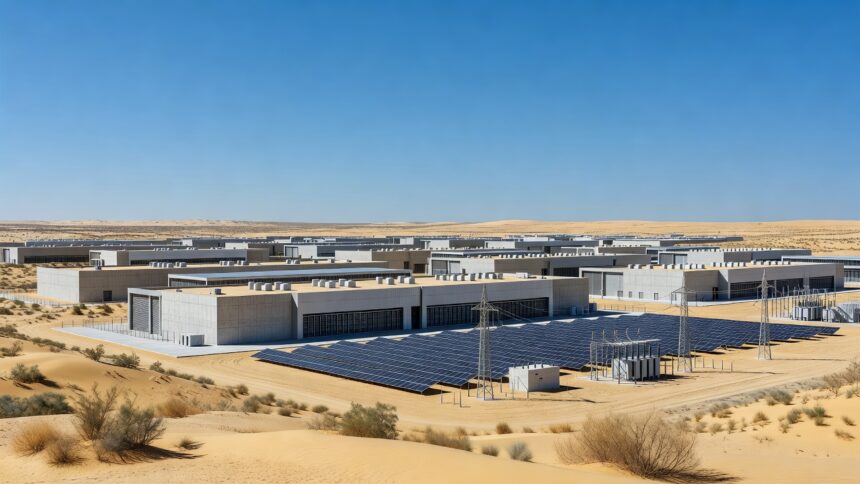
Turning to domestic progress, Alswaha reported that Saudi Arabia’s digital economy has expanded by 75 percent over the past eight years to reach $139 billion. The non-oil segment of the digital economy now contributes 16 percent of GDP, while operational data center capacity has grown to 467 MW, equivalent to 47 percent of the Middle East and North Africa total. The minister highlighted these figures as evidence of the Kingdom’s accelerating digital transformation.
Alswaha also noted advances in women’s participation in the ICT workforce, which has risen from 7 percent to 35 percent and now surpasses averages in the European Union and Silicon Valley. Saudi women additionally rank among global leaders in AI participation and empowerment, he said. The Stanford AI Index ranks Saudi Arabia first worldwide for women’s involvement in AI research, while separate industry reports indicate more than 666,000 women received AI training in a single recent year.
Future development includes 6.9 GW of data center capacity targeted by 2034, including 3 GW by 2030, backed by 12.8 GW of available power capacity at present, according to Alswaha. The minister described this pace as placing Saudi Arabia among the fastest countries globally in delivering energy for computing and AI infrastructure. A national data center strategy from the Ministry of Communications and Information Technology and the Saudi Data and Artificial Intelligence Authority aims for around 1.5 GW by 2030, with an S&P Global assessment projecting 29 percent annual sector growth through the end of the decade.
Alswaha concluded that Saudi Arabia possesses the three essential pillars of the AI era, consisting of compute, customers and capital, and that leading technology companies from the East have already started investing and expanding operations in the Kingdom. The minister’s participation at LEAP East underscores ongoing collaboration between Saudi Arabia and Asian innovation centers. The event builds on LEAP’s established role as a premier platform for technology dialogue.