
 ع
ع


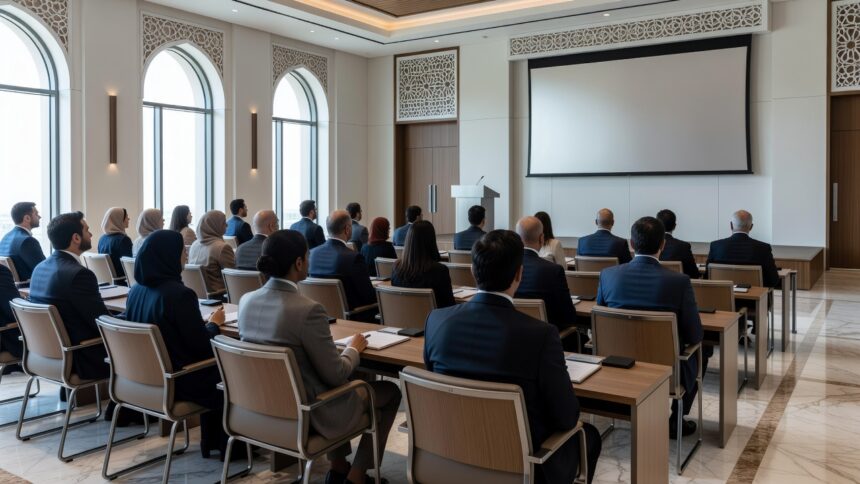
The seminar formed one session within the broader Arabic Language and Applied Sciences Conference, the Saudi Press Agency reported. Discussions centered on national language policy, its implementation across education and public sectors, and alignment with broader cultural preservation goals. Participants reviewed how policy development reflects Saudi Vision 2030 priorities for human capital development and knowledge-based economy advancement.
Conference organizers structured the event to bring together linguists, policymakers and academics for targeted dialogue on applied language sciences. The language-policy seminar examined regulatory aspects, curriculum integration and digital-language applications currently in use within Saudi institutions. Sessions incorporated case studies drawn from regional and international models to contextualize local approaches.
According to the Saudi Press Agency, the gathering highlighted ongoing efforts to standardize Arabic usage while accommodating technological and global communication demands. Presenters addressed challenges related to linguistic diversity, translation standards and Arabic content creation in digital environments. The conference schedule included multiple parallel tracks covering linguistics, computational linguistics and language teaching methodologies.
Saudi Arabia’s Arabic Language Academy and related bodies have expanded policy initiatives in recent years, the agency noted. These include updated guidelines for government communications, educational materials and media broadcasting that reinforce Modern Standard Arabic while supporting dialect preservation. The seminar provided a platform to assess progress against measurable targets set in national development plans.
Additional conference segments explored applied sciences linked to language technology, such as artificial-intelligence tools for Arabic natural-language processing. Industry representatives shared data on current adoption rates of Arabic-language software across Gulf Cooperation Council member states. The event concluded with recommendations for future policy refinement and cross-sector collaboration.