
 ع
ع


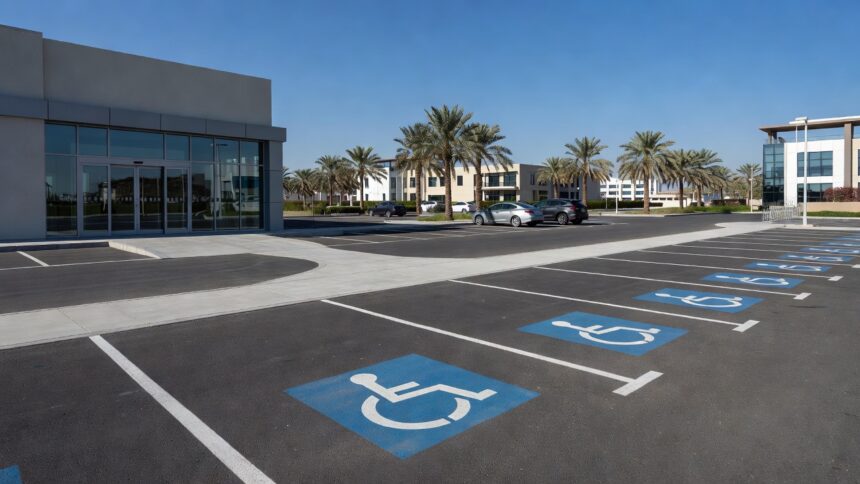
The General Directorate of Traffic has documented 2,135 instances of vehicles parked in spaces reserved for individuals with disabilities across Saudi Arabia. These violations hinder access for those who depend on the designated areas for mobility and daily needs. Authorities have reminded drivers that such actions qualify as traffic violations subject to penalties including potential vehicle impoundment when the operator cannot be identified immediately.
Regulations from the Ministry of Municipal and Rural Affairs and Housing stipulate that these parking spaces must be positioned near building entrances and equipped with accessible routes to minimize barriers. The standards form part of national requirements to support independent movement for persons with disabilities. Traffic enforcement focuses on maintaining the integrity of these spaces throughout commercial and public facilities.
Eligible individuals can secure a traffic facilitation card or digital certificate via the Ministry of Human Resources and Social Development online platform. The application process involves providing a medically approved report that verifies the qualifying condition. Once obtained the authorization permits legal use of the reserved parking areas in all regions of the kingdom.
Similar enforcement drives have recorded comparable violation volumes in recent years. The General Directorate of Traffic reported 1,790 vehicles seized for the same offense during a 2023 campaign according to Gulf News. A separate 2025 operation documented 2,187 such violations industry monitors at Saudi Auto noted.
Fines for unauthorized use of disability parking spaces range from 500 to 900 Saudi riyals the General Directorate of Traffic has previously specified. The penalties form part of sustained efforts to deter misuse and preserve availability for authorized users. Public awareness campaigns accompany these enforcement actions to reinforce compliance with parking regulations.
The Ministry of Human Resources and Social Development has expanded digital services that allow beneficiaries to obtain certificates electronically without repeated office visits. This approach has simplified access to necessary permits for qualifying residents. Figures from ongoing traffic monitoring indicate that clearer procedures contribute to higher rates of proper authorization among those entitled to the spaces.