 ع
ع

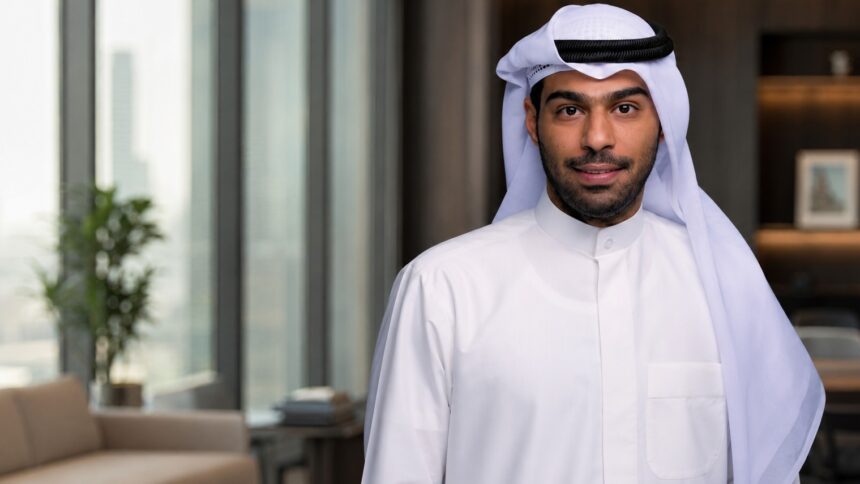
Oqood AI, the Gulf’s first Arabic AI-powered legal platform, raised a $1 million seed round led by Sanabil, a wholly owned subsidiary of Saudi Arabia’s Public Investment Fund. To read that as a small early-stage deal is to miss what the backer represents, and why it chose this category.
The Public Investment Fund is not an ordinary venture investor. With assets under management rising toward $1.15 trillion through 2025, it ranks among the five largest sovereign wealth funds on earth and is the largest in the Middle East, growing from roughly $152 billion in 2015 in one of the fastest expansions of sovereign capital in modern history. More important than its size is its mandate. PIF operates on a dual basis: as a financial investor seeking returns, and as a state development vehicle charged with building entirely new economic sectors inside Saudi Arabia under Vision 2030. When capital of that character reaches a category, it is expressing a view about the sector’s strategic future, not just a single company’s prospects.
What the fund is actually building
That view is visible in where the Kingdom is putting its AI weight. In May 2025, PIF launched HUMAIN, a company built to develop the entire AI stack, data centres, cloud infrastructure, models and applications, with a specific emphasis on advanced Arabic-language models. Saudi Arabia is investing, at sovereign scale, in the infrastructure of Arabic-language artificial intelligence as a national priority.
An Arabic-first legal AI platform sits squarely inside that thesis. If the Kingdom is building Arabic language models and the compute beneath them, the applications that run on top, particularly in high-value professional domains like law, are the logical next layer. A legal platform built natively for Arabic and the region’s civil-code systems is not adjacent to Saudi Arabia’s AI strategy. It is an application of it.
The structure of Saudi tech funding reinforces the point. As one analysis of the Kingdom’s venture landscape put it, the Saudi government is simultaneously the largest customer for technology solutions through Vision 2030 mandates, the largest catalytic funder through vehicles like Sanabil and STV, and the largest co-investor through PIF’s direct startup investments. For a company whose product aligns with government digital-transformation priorities, that triple role turns a seed investor into a potential customer, network, and strategic partner at once.
The market the money is chasing
The founder’s framing of the raise put the category, not the milestone, at the centre. “This round reflects investors’ growing interest in the legal tech sector, which exceeded $31 billion last year and is projected to grow at an annual rate of 9.4% in the coming years,” said Khaled Al Rashed, Oqood’s founder and chief executive.
Those are the numbers that make the logic close. A global legal-technology market above $31 billion, compounding at nearly 10% a year, is large enough to matter and early enough to contest. Regionally, the pull is sharper still: the GCC legal-tech market is valued at roughly $1.2 billion and adoption is rising around 15% a year, according to Ken Research, driven by digitisation and compliance demand concentrated in Saudi Arabia and the UAE. Within that, the Arabic-language, civil-code segment is the part global incumbents built for English common law are least able to serve, precisely the gap a regionally built platform is positioned to own.
What Oqood is building for
Oqood’s own aim, as described at the raise, is to expand its platform to more law firms and corporate legal departments, streamlining legal workflows and client communication, with plans to move into Gulf and international markets. It is an enterprise-grade platform, ISO and SOC 2 certified, built specifically for legal work that runs across Arabic and English and within the civil-code systems that govern the region, the structural mismatch that has made imported, common-law-trained tools an awkward fit for Gulf practice.
That combination, a product built for a genuine regional gap, in a category compounding at double digits, backed by capital with a sovereign mandate to build exactly this kind of sector, is what makes the investment more than a line item. It is a small early position in a thesis the Gulf’s most strategic capital is assembling in the open.
Reading the signal
For anyone watching Gulf technology, the takeaway is not the size of one round. It is the identity of who led it and why. Legal AI in the region is moving from an open question to a contested category, and the capital positioning early is not generalist venture money. It is capital with a national mandate and a clear view of where strategic value will settle.
When a $1 trillion sovereign fund leads a round in Arabic legal AI, it is worth asking what it sees. The likeliest answer is that the companies building for the region’s languages and legal systems are not a niche within the category. They are where its most consequential value is expected to be made.