
 ع
ع


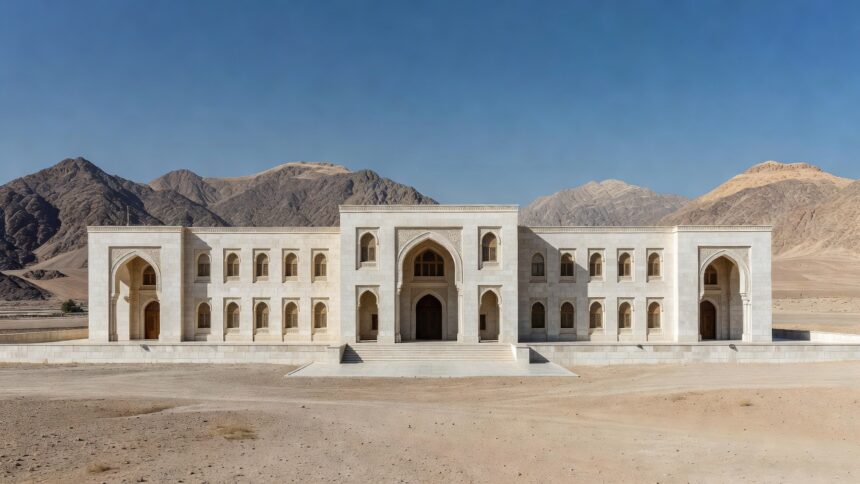
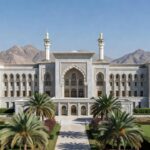
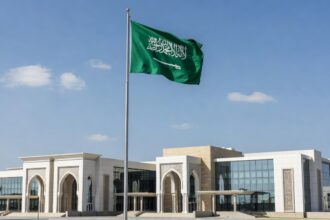
The Makkah Joint Defense Agreement was signed on August 7 at Al-Safa Palace during a summit attended by Crown Prince and Prime Minister Mohammed bin Salman, Turkish President Recep Tayyip Erdoğan and Pakistani Prime Minister Muhammad Shehbaz Sharif, according to the Saudi Press Agency. A joint statement issued after the ceremony said the pact builds on historical ties, Islamic solidarity and shared strategic interests among the three nations while aiming to strengthen collective deterrence against aggression. The Saudi Press Agency reported that the agreement will enhance readiness, integrate defense capabilities and contribute to security and stability both regionally and globally.
Saudi Deputy Minister for Public Diplomacy Amb. Dr. Rayed Krimly clarified on the day of the signing that the pact does not establish a military axis or sectarian bloc and holds no connection to nuclear ambitions or any arms race. Krimly added that the agreement does not come at the expense of the kingdom’s strategic relations with its Gulf, Arab and international partners, according to his remarks. He further stressed that the pact poses no threat to the security of any other country and should not be interpreted as an escalation of tensions.
Krimly noted that the Makkah Joint Defense Agreement does not replace or supersede existing bilateral or multilateral pacts involving any of the three parties with other nations or organizations. The deputy minister described the new framework as the result of detailed negotiations conducted over several years that reflect the depth of longstanding strategic relations among Saudi Arabia, Türkiye and Pakistan. Under its terms the three countries will develop joint capabilities and strengthen deterrence to address common security threats.
“Any external armed attack against one of the three countries will be regarded as an attack against all three,” Krimly said. The Saudi Press Agency indicated that the pact treats an armed attack on any one member as an attack on all, a provision that echoes collective defense principles seen in other security arrangements. A report by Haaretz noted the timing of the agreement amid regional turmoil following repeated attacks on Gulf states since U.S. and Israeli strikes on Iran.[[1]](https://www.haaretz.com/middle-east-news/2026-08-07/ty-article/saudi-arabia-turkey-and-pakistan-sign-defense-pact-amid-regional-tensions/0000019f-dbc5-d310-a3df-dfc75f0a0000)
The trilateral pact extends a strategic mutual defense agreement Saudi Arabia and Pakistan signed in September 2025 that similarly declared any aggression against one as aggression against both, according to a joint statement from that period carried by Al Jazeera. A BBC analysis of Saudi-Pakistani defense ties highlighted their resilience since the 1960s, including Pakistani troop deployments, assistance during the 1979 Grand Mosque siege in Mecca and subsequent military cooperation in training and arms procurement.[[2]](https://www.bbc.com/news/articles/c147gkxyyrmo) The addition of Türkiye broadens the framework at a time when all three nations have deepened security coordination.
Krimly’s remarks emphasized that the agreement promotes peace and stability without targeting any specific actor, aligning with the joint statement’s language on expanding defense cooperation. The Haaretz coverage indicated the pact has been described as open to other regional countries willing to join its objectives. Officials from the three capitals have signaled that further details on implementation will emerge in coming months as they begin integrating selected defense systems and conducting joint exercises.