

 ع
ع


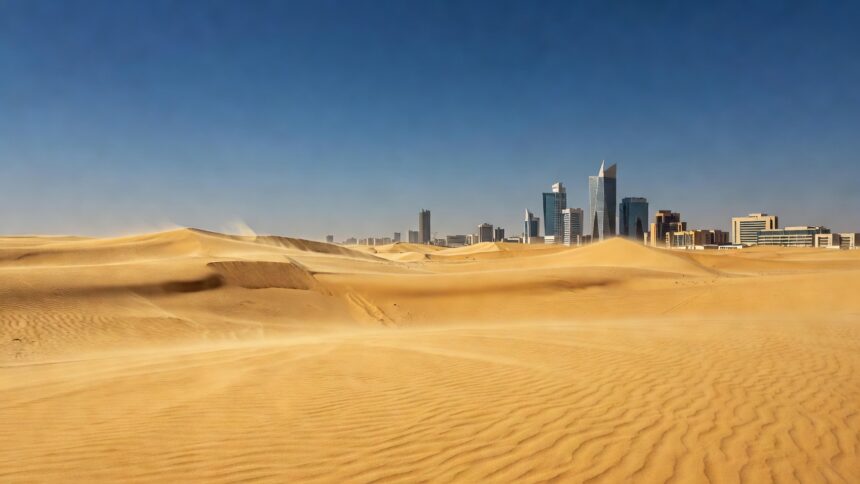
The National Center for Meteorology placed Dammam at the top of the heat list with a forecast high of 49 degrees Celsius on Sunday, followed by 47 degrees in both Riyadh and Buraidah. Makkah was expected to reach 45 degrees, Madinah 43 degrees and Jeddah 42 degrees according to the same forecast. Lower maxima were predicted elsewhere with Abha at 31 degrees, Tabuk and Jazan at 37 degrees, Hail and Najran at 42 degrees, Al-Baha at 30 degrees and both Arar and Sakaka at 41 degrees.
Thunderstorms accompanied by moderate to heavy rain and hail that could trigger flash floods were forecast over parts of Jazan and Asir by the National Center for Meteorology. Light to moderate thunderstorms were also expected over sections of Al-Baha and Makkah where fog might form over the highlands. The center added that active winds would accompany the storms in those southern regions.
Active winds stirring dust and sand were predicted across parts of Riyadh, the Eastern Province, Madinah, Makkah, Najran and Tabuk according to National Center for Meteorology data. Riyadh would see suspended dust while Makkah, Madinah and Jeddah were set to be partly cloudy with raised dust and gusty winds. Dammam, Buraidah, Hail, Sakaka, Arar, Abha, Al-Baha, Jazan and Najran faced their own combinations of dust, winds, thunderstorms or partly cloudy skies as detailed in the center’s regional breakdown.
A study published in the journal Theoretical and Applied Climatology that examined Jeddah weather records from 2000 to 2024 found heat events have grown more frequent in recent years with 59 such episodes recorded in 2024 alone. The analysis identified 645 heat events overall during the quarter-century period alongside 777 rainfall events that often arrived in short intense bursts. Such patterns have heightened concern over the interaction between extreme heat and sudden downpours in the kingdom.
Flash floods have inflicted heavy losses in past Saudi Arabian episodes with the 2009 Jeddah event killing 113 people and damaging thousands of homes and vehicles according to a Climate Scorecard compilation of regional hazards. A similar 2011 flood in the same city caused additional deaths and infrastructure failures when 111 millimetres of rain fell in hours. Those historical precedents underscore the risks outlined in the current National Center for Meteorology forecast for areas prone to rapid runoff.
Fog was also expected to develop during the night and early morning over sections of the Eastern Province coast and the Jazan coast the National Center for Meteorology indicated. The forecast forms part of an extended period of hot to very hot conditions the center had projected to persist from Sunday through Wednesday with maxima ranging from 47 to 50 degrees in affected zones. Dust events reducing visibility to near zero were highlighted along certain coastal roads in Madinah, Makkah and Jazan.