
 ع
ع


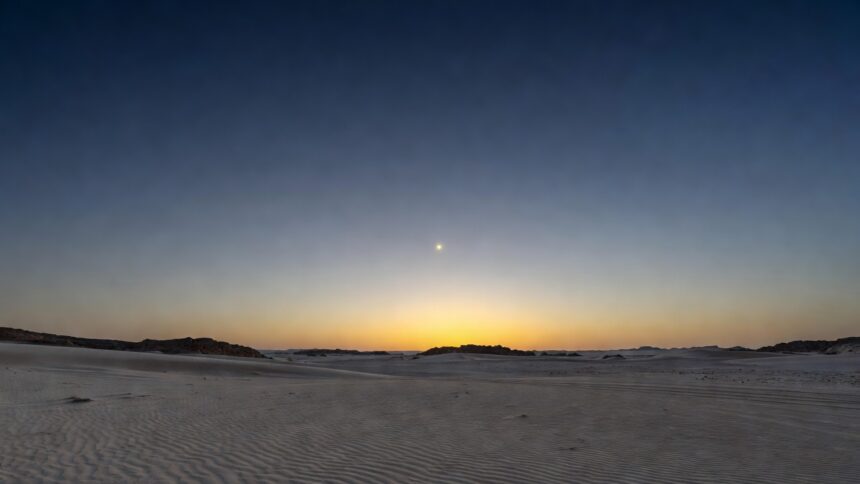
The Suhail star is set to rise at around 5:51 a.m. on August 26, one minute before local sunrise, according to Mohammed Enad Al-Huzaimi. Although dawn light and its low position near the horizon will initially prevent naked-eye observation, the star typically climbs high enough for visibility during the first third of September as its rising time advances. Al-Huzaimi, a member of the Astronomy and Space Club, noted that the event has served for generations as a reliable signal of seasonal change in the Northern Borders Region.
Suhail, known scientifically as Canopus and situated in the Carina constellation, stands as the second-brightest star in the night sky after Sirius, Al-Huzaimi reported. The star lies approximately 310 light-years from Earth. Its annual appearance has consistently functioned as a seasonal benchmark for populations across the Arabian Peninsula.
Historically the star enabled Arabs to track evolving weather patterns, shortening daylight and cooler evening temperatures, according to the astronomy expert. It also guided decisions on agricultural activities, livestock grazing and caravan movements, weaving itself into the fabric of regional astronomical heritage. Comparable forecasts from the Emirates Astronomical Society have placed the rise on August 24 in UAE skies, illustrating slight regional variations in observed timing.
Traditional arithmetic allocates 52 days to the Suhail season, segmented into four equal 13-day intervals that begin with Al-Tarfah and continue through Al-Jabhah, Al-Zubrah and Al-Sarfah, Al-Huzaimi explained. The concluding phase carries a traditional association with the moderation of extreme heat. This framework merges observational astronomy with centuries-old cultural knowledge.
The star’s emergence aligns with the Earth’s yearly orbit, which modifies solar incidence angles and daylight length, a dynamic highlighted in Al-Huzaimi’s assessment. Such celestial cues supplied pre-modern societies with an independent method for anticipating climatic transitions. Full visibility in the Northern Borders area often materializes only after the initial August 26 rise, the club member added.
Similar traditions persist throughout the Gulf, where Qatar Calendar House issues parallel annual announcements on the star’s appearance and its link to forthcoming weather moderation. These recurring reports sustain connections between contemporary observers and ancestral environmental awareness. The practice remains relevant in a climate zone defined by pronounced seasonal temperature swings.