
 ع
ع


More than 71,000 commercial registrations were issued in one quarter. At a leading Saudi accelerator, eight companies survived a field of more than 690 applicants. The scarce commodity is shifting from formation to selection.
Saudi Arabia issued more than 71,000 commercial registrations in the second quarter of 2026, taking the total number of active registrations above 1.91 million. The Ministry of Commerce’s Q2 business-sector bulletin also showed that the number of establishments had risen 18 percent over five years to 1.28 million, while limited-liability company registrations exceeded 612,000 after growing 173 percent.
The technology layer is moving faster still. By the end of 2025, the number of commercial registrations for artificial-intelligence technologies had reached 19,638, up 240 percent from 5,762 in 2021, according to the Ministry’s Q1 2026 bulletin.
Saudi Arabia has become highly efficient at enlarging the top of the entrepreneurial funnel. The more interesting number now sits at the narrow end.
Eight from more than 690
On June 25, 2026, 500 Global and PIF-owned Sanabil Investments announced the eleventh cohort of the Sanabil Accelerator by 500 Global. Eight startups were chosen from more than 690 applications, according to the programme announcement.
That is an acceptance rate of roughly 1.2 percent.
The selected companies span AI-enabled healthcare diagnostics, fintech and payments infrastructure, digital risk and fraud detection, insurance, compliance and content monetisation. The 12-week programme ran from April 5 to July 1, and its organisers said the selection process emphasised operating discipline and clear business fundamentals.
In the June 25 announcement, Amal Dokhan, Managing Partner at 500 Global MENA, said founders were demonstrating “stronger execution, deeper innovation, and clearer paths to scale.”
Those are fundamentally different tests from the ones required to register a company.
From access to filtration
There is one necessary limit to the comparison. More than 71,000 quarterly registrations do not represent 71,000 venture-backed technology startups. They include businesses across the Saudi economy, while the 690-plus accelerator applicants form a far narrower, self-selecting group. The two numbers should not be treated as one conversion funnel.
Placed beside each other, however, they show what changes once business formation becomes easier. Incorporation ceases to be the primary bottleneck. Evaluation moves downstream.
The Sanabil Accelerator is built for that later test. 500 Global describes the programme as a 12-week platform for early-stage technology companies, and Amal Dokhan has previously described its model as one that combines investment with mentorship, market access and connections throughout the founder journey. The requirement is not simply an idea that can be registered. It is evidence that the idea can survive customers, competition, capital and execution.
That changes the economic role of accelerators. In an immature ecosystem, their value is largely access: introductions, training, a first cheque and a community that may otherwise be difficult to reach. In an ecosystem producing companies at scale, their value increasingly lies in filtration, forcing founders to establish which assumptions are real before later-stage capital prices the mistakes more severely.
Networks become part of the asset
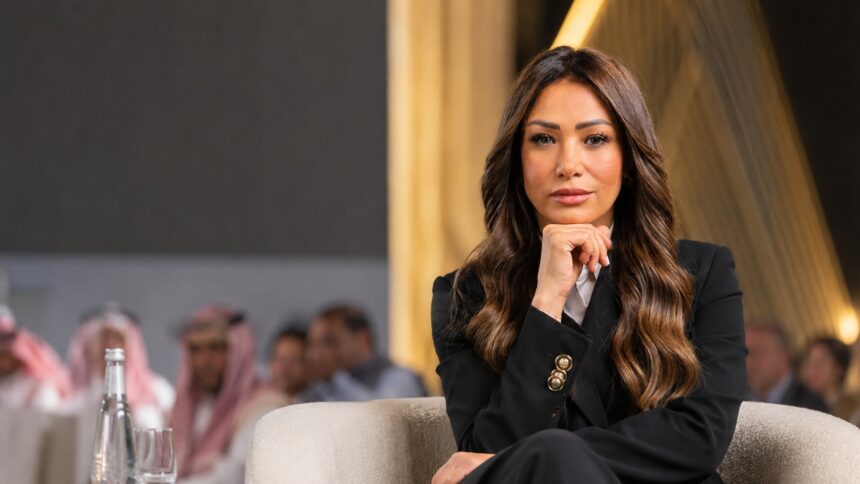
Dokhan’s own description of accumulated experience helps explain why that filter cannot be reduced to a spreadsheet. In the WORLDEF Talks clip published on June 3, 2026 and shared through her Instagram account, she described learning as the ability to keep “connecting solutions,” “connecting worlds” and “connecting networks.”
The observation fits the infrastructure now surrounding Saudi founders. The Batch 11 accelerator gave participating companies targeted mentorship, operator-led workshops and access to regional and global networks ahead of Demo Day, with the first phases moved online amid regional uncertainty. The product being offered is not simply capital. It is exposure to patterns learned across companies, sectors and markets.
Dokhan closed the same WORLDEF passage with a personal line: “A life goal is to never stop working until the last day of my life.” In a market producing businesses faster than any single investor can assess them, the remark captures the emerging problem neatly. Saudi Arabia no longer needs only more people willing to start. It needs institutions, investors and founders prepared to keep learning long after the commercial registration has been issued.
The 71,000 figure measures abundance. The eight measure selection. The next stage of Saudi entrepreneurship will be decided in the distance between them.