ع



Saudi Finance Minister Mohammed Al-Jadaan told the third meeting of G20 Finance Ministers and Central Bank Governors that the Kingdom’s investments in alternative transit and supply routes have helped maintain uninterrupted energy supplies and trade flows amid uncertainty. Al-Jadaan addressed the session held under the US presidency in Bangkok on Thursday, where he underlined that effective international cooperation remains essential to achieving broader economic stability. The minister added that reliable energy at affordable prices combined with steady movement of essential goods can contain price pressures and ease burdens on national budgets.
Al-Jadaan noted that the global economy has shown its capacity to adapt to repeated disruptions, with resilience forming the foundation of that response. He pointed to the role of multilateral financial institutions in assisting vulnerable economies as they manage financing pressures that have intensified in recent years. According to the minister, such support helps mitigate the effects of shocks on the most affected countries.
The Saudi minister emphasized that strengthening economic resilience involves diversifying sources of growth, safeguarding core economic foundations and building the ability to handle prolonged disruptions. In this context, he highlighted how infrastructure, transportation networks and supply routes enhance an economy’s capacity to absorb shocks while limiting their impact on markets and the availability of key commodities. Al-Jadaan said these priorities have become more pressing as recurring events continue to influence trade flows, goods availability and associated costs.
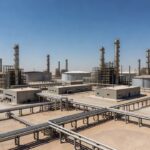
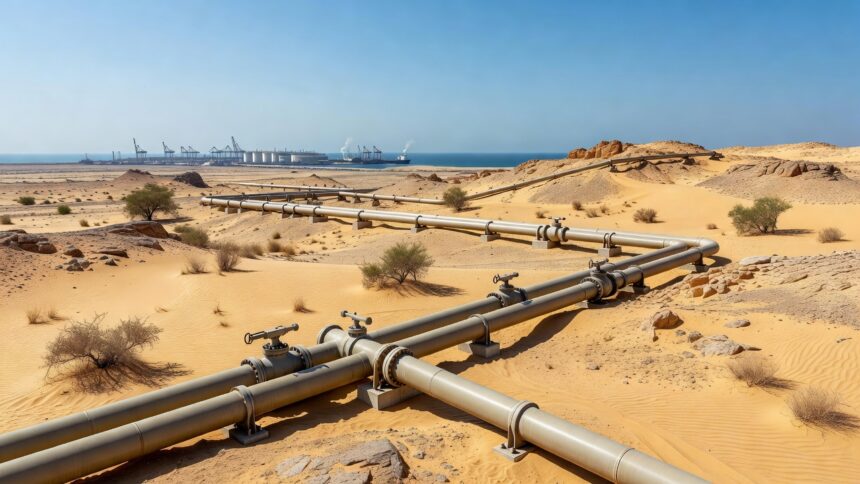
Saudi energy authorities have positioned the East-West Pipeline as a central element of these alternative routes, linking eastern production areas to the Red Sea port of Yanbu and allowing exports to bypass traditional maritime chokepoints. Statements from the energy ministry indicate current operations at around 5 million barrels per day with feasibility work underway to expand capacity toward 10 million barrels per day through pumping station upgrades and related infrastructure improvements. The Gulf Research Center has tracked how these long-term investments, initiated decades ago, now provide strategic redundancy during periods of regional instability.
Additional proposals under review include new pipeline connections to Oman and expanded rail freight corridors that would further diversify options for Saudi Arabia and neighboring Gulf producers. Saudi Aramco has confirmed engineering studies for extra export routes, including potential integration with the Sumed pipeline through Egypt to reach Mediterranean markets. These initiatives form part of a regional pattern in which multiple states seek to reduce reliance on single passages through coordinated infrastructure development.
Al-Jadaan reiterated at the G20 gathering that the Kingdom’s approach contributes to global stability by supporting consistent energy availability even when conventional routes face constraints. He called for continued focus on economic diversification, reinforced energy and food security, and resilient supply chains across nations. Assessments from multilateral organizations show that such measures help limit volatility in international markets and support sustained growth.