ع



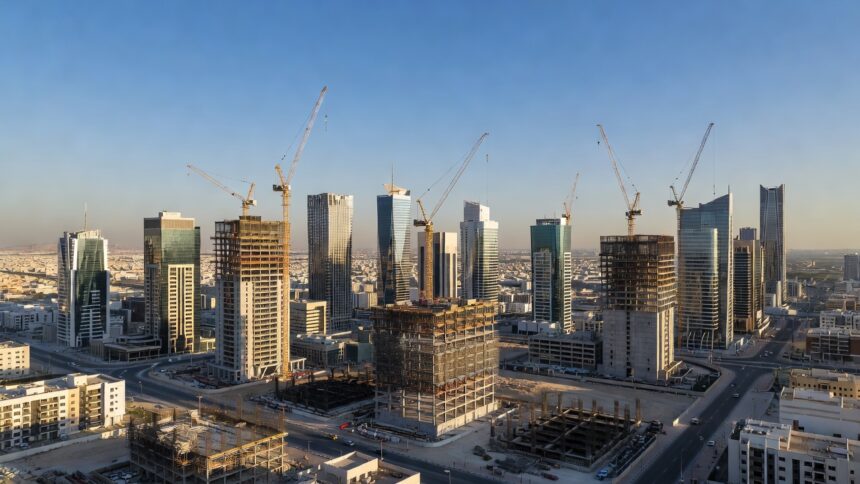
The Ministry of Municipalities and Housing announced that it issued 80,775 construction permits across all regions of Saudi Arabia from January to the end of September 2026. The ministry said the permits form part of its drive to organise building work, simplify licensing steps and align with urban expansion in cities and governorates. According to the ministry, upgrades to the municipal licensing framework together with expanded digital services on the Balady platform have eased the granting of permits, shortened application times and lifted the overall user experience through efficient electronic channels that deliver transparency.
The ministry’s statement assigned a leading role to municipalities and local authorities in applying the licensing system, monitoring requests and confirming that all technical conditions are satisfied. Those bodies also pursue continuous improvements in procedures, service quality and coordination with other agencies involved in construction and urban projects. The platform’s digital tools, the ministry added, allow applicants to complete formalities quickly while maintaining full clarity at every stage.
Earlier in the year the ministry reported that more than 34,000 building permits had been issued in the first six months of 2026, with residential units forming the largest category at over 28,000. Commercial permits in that period exceeded 5,000 while government-related permits surpassed 1,000, according to figures published on the Balady platform. The nine-month total therefore indicates a continued high level of activity across the residential, commercial and public sectors.
A Knight Frank review placed the value of Saudi Arabia’s projects in planning or execution at $2.07 trillion in the first half of 2026, of which $1.23 trillion fell under construction and real estate. The same assessment forecast construction-sector output to reach roughly $190.4 billion for the full year of 2026 before climbing toward $250.2 billion by 2030. Riyadh province captured the largest share of contracts awarded between 2020 and August 2026, the review showed.
The ministry has tied the licensing volumes to its wider digital transformation that also produced or renewed more than 274,000 commercial licences in the first half of 2026. Those included over 97,000 newly issued commercial licences along with renewals and amendments handled through the same Balady system. The combined licensing data therefore covers both building permits and associated commercial authorisations that underpin urban and investment activity.