
 ع
ع


Preliminary figures from the authority indicated merchandise exports grew 3.9 percent from a year earlier with oil shipments up 19.5 percent to represent 75.6 percent of the total compared with 65.7 percent previously. The trade surplus increase was accompanied by a 19.5 percent decline in imports over the same period. Non-oil exports including re-exports meanwhile decreased 26.1 percent the data showed.
GASTAT data places the ratio of non-oil exports including re-exports to imports at 33.8 percent in May 2026 down from 36.8 percent a year earlier. National non-oil exports excluding re-exports fell 27.3 percent while re-exports dropped 24.4 percent with machinery electrical equipment and parts which accounted for 46.2 percent of re-exports declining 32.4 percent. Machinery and electrical equipment and parts represented 22.0 percent of total non-oil exports and fell 31.6 percent while plastics rubber and articles at 17.6 percent declined 28.2 percent.
Imports of machinery electrical equipment and parts which comprised 26.4 percent of the total decreased 28.0 percent even as mineral products making up 11.9 percent rose 65.7 percent according to the authority. China remained the leading trading partner absorbing 12.3 percent of Saudi exports and providing 22.0 percent of imports. South Korea and the United Arab Emirates ranked as the next top export destinations while the United States and Egypt featured prominently among import sources.
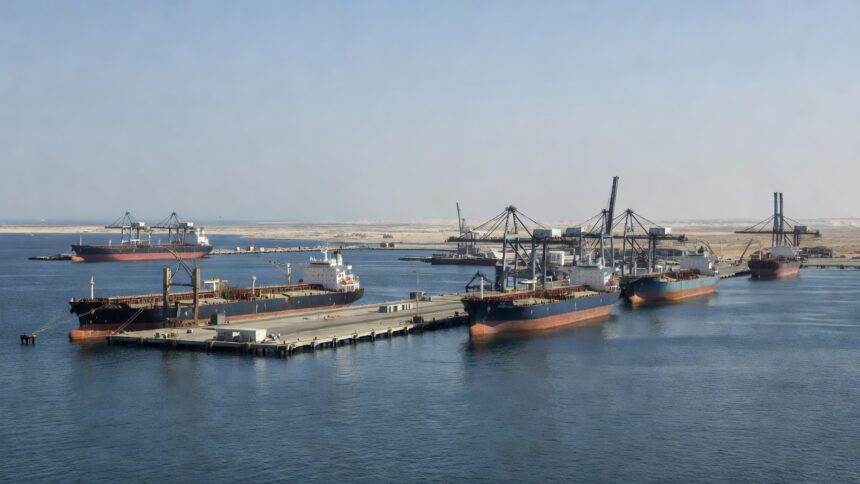
The Jeddah Islamic Sea Port accounted for 35.7 percent of overall imports with the top five ports handling 73.8 percent GASTAT figures show. In non-oil exports the port led with a 24.4 percent share and the top five ports covered 65.2 percent of volumes. These infrastructure concentrations highlight the central role of major facilities in the kingdom’s trade flows.
The May results follow a trade surplus of 25.4 billion Saudi riyals in April 2026 and 57.4 billion riyals in March according to Trading Economics citing earlier GASTAT releases. Non-oil exports have fluctuated in recent periods after posting gains in late 2025 that gave way to the current contraction. The authority continues to issue monthly statistics that allow tracking of these evolving patterns.
Saudi Arabia is pursuing broader economic diversification under the Vision 2030 plan which the official Vision 2030 website identifies as seeking to expand non-oil exports and lessen dependence on oil revenues. The framework includes institutional measures aimed at strengthening sectors such as petrochemicals minerals and manufactured goods. Latest GASTAT updates underscore that oil remains dominant in near-term trade balances while non-oil development stays a policy priority.