
 ع
ع


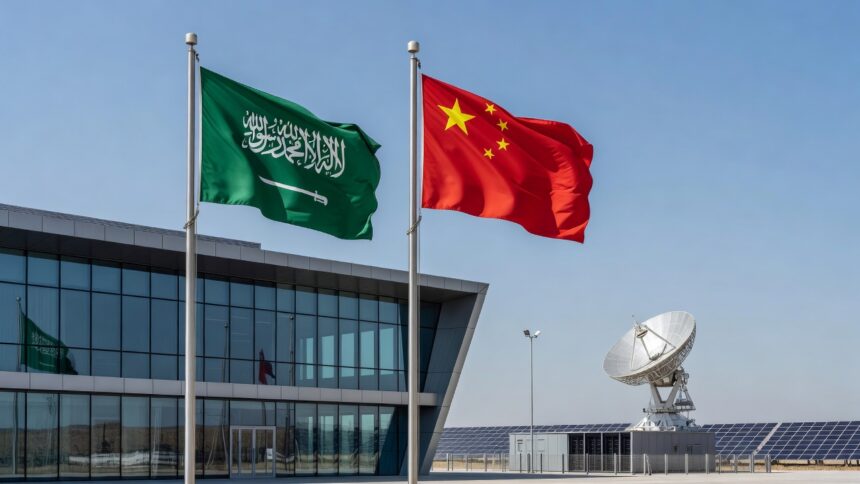
Saudi Arabia’s Minister of Communications and Information Technology Abdullah Alswaha met with China’s Minister of Science and Technology Yin Hejun in Beijing on July 14, 2026, according to a Ministry of Communications and Information Technology summary of the visit. The discussions focused on expanding cooperation in artificial intelligence and the digital economy along with technology transfer, talent exchange programs and measures to encourage greater investment by Chinese firms in the kingdom. Alswaha emphasized Saudi Arabia’s interest in deepening these ties as part of broader efforts to build a knowledge-based economy.
The ministry summary noted that Alswaha also held talks with Dr. Shan Zhongde of the China National Space Administration during the same visit. Those conversations centered on space technology cooperation and joint innovation initiatives in the sector. The engagement builds on existing frameworks between the two countries in satellite development and space exploration activities.
Separate meetings with executive leadership at Moonshot AI covered potential collaboration on large language models and generative artificial intelligence technologies, the ministry summary stated. Discussions included pathways for technology transfer and commercialization of such tools within Saudi Arabia. Alswaha explored how these capabilities could accelerate local AI development and deployment across key industries.
The minister additionally met with Zhang Lidong of ByteDance to address generative AI applications, data center infrastructure, algorithm development and potential expansion of the company’s operations in the kingdom, according to the ministry summary. These talks highlighted opportunities for ByteDance to contribute to Saudi Arabia’s digital infrastructure growth while supporting local talent development and innovation ecosystems.
The engagements align with Saudi Arabia’s National Strategy for Data and Artificial Intelligence, which the Saudi Data and Artificial Intelligence Authority projects will contribute significantly to non-oil GDP growth by 2030. The authority’s figures indicate the strategy aims to position the kingdom as a global leader in AI, with targeted investments in compute capacity and localized models. This latest round of China partnerships complements earlier initiatives, including the development of the AceGPT Arabic language model through collaboration between King Abdullah University of Science and Technology and Chinese research institutes, as detailed in reports from the Shenzhen Research Institute of Big Data.
Saudi Arabia’s Public Investment Fund has expanded its technology portfolio in recent years, including a $400 million stake in Chinese artificial intelligence firm Zhipu AI that Prosperity7 Ventures completed to support open-source model development, according to investment disclosures reviewed by Bloomberg. The China National Space Administration has served as a longstanding partner for the Saudi Space Commission, established in 2018, with joint projects that have included lunar exploration coordination and satellite technology sharing, a Saudi Space Commission overview found. These cumulative efforts form part of the kingdom’s Vision 2030 framework for economic diversification and technological self-reliance.