
 ع
ع


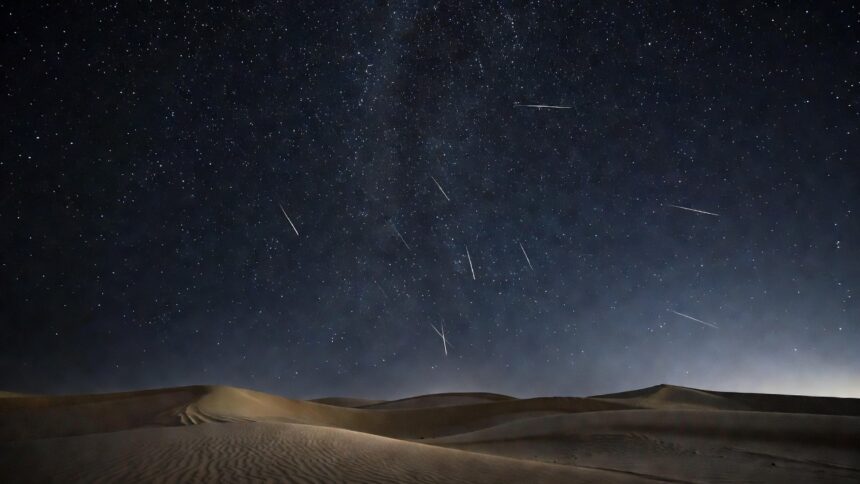
Majed Abu Zahra, head of the Jeddah Astronomy Society, reported that the Delta Aquariids meteor shower will reach its maximum activity in the hours before dawn on Thursday. The expert indicated viewing should begin around 3 a.m. when the radiant rises in the southern sky above the horizon. Activity continues until sunrise, offering a window for sightings across Saudi Arabia and neighboring countries. Abu Zahra added that locations removed from city lights will yield the best results for naked-eye observation.
The shower has remained active since mid-July and will persist through late August, the Jeddah Astronomy Society assessment found. Particles from the stream strike the atmosphere at roughly 41 kilometers per second, producing swift and often faint meteors. Moonlight is expected to interfere with visibility at the peak, yet the display should still prove noticeable to dedicated watchers in dark-sky areas. The society noted that the event appeals strongly to both casual stargazers and those equipped for photography.
International Meteor Organization data places the zenithal hourly rate for the Delta Aquariids at approximately 25 under optimal conditions free of light pollution and moonlight. A NASA meteoroid environment overview traces the debris to comet 96P/Machholz, whose fragments create the annual summer shower first systematically recorded in the 19th century. The organization lists the display as one of the more reliable annual events, though typically less prominent than the Perseids that follow in August. Such benchmarks help observers calibrate expectations for regional visibility in the Arab world.
The Jeddah Astronomy Society advised that no specialized equipment is required, with the naked eye sufficient to catch the majority of streaks. Abu Zahra recommended facing southward after the radiant gains altitude to increase detection rates. Preparation includes allowing eyes to adapt to darkness for at least 20 minutes prior to scanning the sky. These steps, the society emphasized, maximize chances during the narrow pre-dawn window on Thursday.
Enthusiasts across the Arab region have already begun planning outings to rural or desert sites where light pollution remains minimal, according to the Jeddah Astronomy Society. Abu Zahra highlighted that astrophotographers stand to capture striking images if conditions align, particularly with long-exposure techniques. The shower’s southern radiant favors latitudes in the Arabian Peninsula, where the constellation Aquarius climbs higher before dawn. Such factors combine to make the event a notable fixture on the annual astronomical calendar.
Records maintained by the American Meteor Society confirm the Delta Aquariids typically build gradually before the late-July maximum and taper slowly afterward. The society reported that past peaks have occasionally exceeded average rates when Earth encounters denser filament sections of the stream. For 2026 the combination of timing and lunar phase presents a moderate display rather than an outburst. Abu Zahra encouraged public participation to foster broader interest in astronomy throughout the region.