
 ع
ع


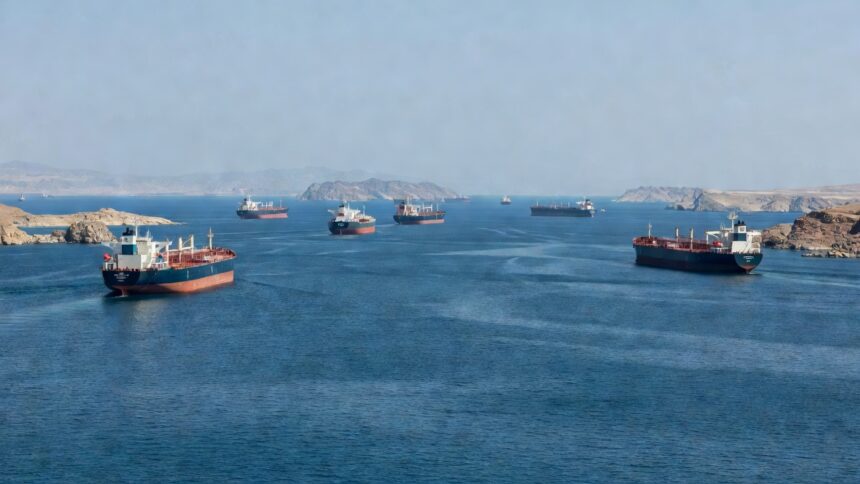
The Saudi Foreign Ministry issued a statement strongly condemning Iran’s attack on a UAE tanker transiting the Strait of Hormuz. According to the ministry, these unacceptable actions constitute an assault on the security and safety of maritime navigation together with global energy supplies. The ministry described Iran’s continued perpetration of such strikes as a grave violation of international laws and norms, including Security Council Resolution 2817 that guarantees freedom of navigation and safe passage in international waterways. It placed responsibility on Iran for the consequences of its aggression.
The Foreign Ministry demanded that Iran immediately end these violations to preserve the security, stability and safety of the region. In the same statement, the ministry reiterated the kingdom’s full solidarity with the United Arab Emirates and voiced support for all measures Abu Dhabi takes to protect its sovereignty and resources. The position was distributed via the Saudi Press Agency on Saturday.
The United Arab Emirates separately condemned the hostile Iranian attack on an ADNOC tanker that was struck by a missile in the Strait of Hormuz. The Emirates News Agency reported that no injuries occurred and ADNOC had brought the situation under control. Coverage in The National identified the strike as the 16th on an ADNOC vessel since the start of recent regional conflicts, with Qatar and Jordan issuing parallel denunciations.
U.S. Energy Information Administration data places average oil flows through the Strait of Hormuz at 20.9 million barrels per day during the first half of 2025. The EIA assessment found that volume accounted for approximately 20 percent of global petroleum liquids consumption, with China, India, Japan and South Korea receiving 74 percent of the crude oil and condensate transiting the passage. Saudi crude exports represented 38 percent of total Hormuz crude flows in 2024 according to the same figures.
The incident unfolded against heightened tensions in which Iran has faced repeated accusations of targeting commercial shipping. Al Jazeera reported that the UAE Foreign Ministry called the strike a blatant violation of the cited Security Council resolution and urged Tehran to halt such hostile actions while reopening the strait fully. A Ynet News dispatch noted Iranian warnings that certain regional defense pacts could not guarantee security in the area.
The Saudi statement aligns with a pattern of Gulf cooperation on maritime security matters that affect oil exports vital to the global economy. The EIA has tracked persistent importance of the Hormuz route despite periodic disruptions linked to broader geopolitical strains. Multiple Gulf governments have now publicly aligned in demanding respect for international navigation standards following the latest strike.