ع



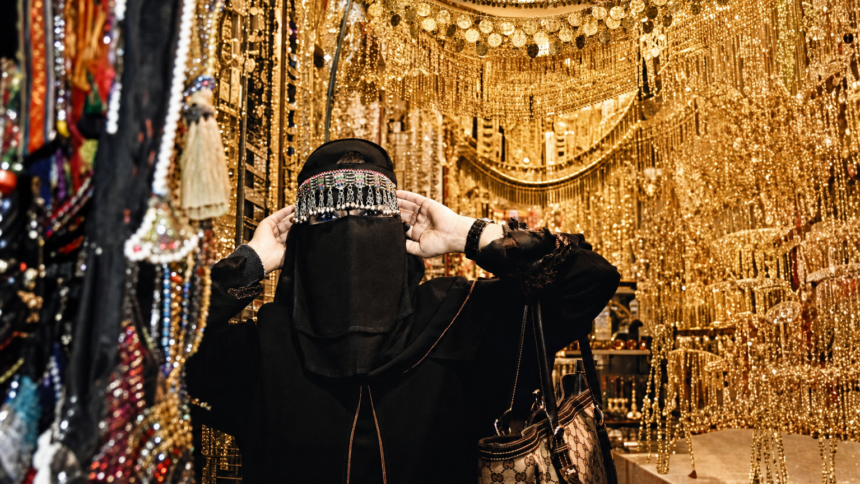
The directive came in a circular addressed to the Federation of Saudi Chambers that requires practitioners in the trade of precious metals and gemstones to identify clients, verify their identities using reliable official documents and retain all related records. Establishments must display prominent awareness signage in all branches explaining the verification requirements to customers ahead of any transaction. The Ministry of Commerce stressed that simply presenting an identity document is not sufficient on its own and that full due diligence procedures must be completed including confirmation of the document’s validity.
The SR50,000 threshold applies to both purchases and sales carried out in cash and covers situations where the amount is reached through several apparently connected transactions rather than one single payment. The circular made clear that meeting this financial limit does not remove any other obligations such as issuing detailed invoices or collecting full seller and buyer information required under the system for precious metals and gemstones. A Ministry of Commerce assessment found that suspicious activities in the sector have included large cash buys that ignore normal product specifications or client profiles as well as attempts to avoid identity checks altogether.
This instruction builds directly on the guidance manual the Ministry of Commerce published in December 2025 to support compliance with targeted financial sanctions and countering of money laundering in the precious metals trade. The manual promotes a risk-based approach that includes ongoing transaction monitoring and screening against national and international sanctions lists. Saudi Arabia’s foundational anti-money laundering law issued by royal decree in 2018 has continued to shape these sector-specific requirements for designated non-financial businesses.
Related regulatory tightening includes the June 2026 revision to traveler declaration rules that reduced the threshold for mandatory customs reporting of gold bullion, precious metals, gemstones or jewelry to SR40,000 from the previous SR60,000 level. The Zakat, Tax and Customs Authority now holds authority to seize undeclared items for up to 72 hours when suspicions arise and can impose fines reaching 50 percent of value for repeat offenses. These parallel measures aim to reduce vulnerabilities across the entire precious metals value chain according to updated executive regulations.
Ministry of Commerce figures show the department carried out more than 58,000 inspection rounds on commercial outlets including gold and jewelry shops throughout September 2026 with a focus on pricing transparency, product availability and overall regulatory adherence. Such visits have become routine as authorities seek to ensure uniform application of identity verification and record-keeping standards across all licensed premises. The Federation of Saudi Chambers is tasked with circulating the latest directive to member businesses to facilitate immediate implementation.
The precious metals and gemstones sector operates under strict licensing from both the Ministry of Commerce for retail activities and the Ministry of Industry and Mineral Resources for manufacturing. Guidance materials including the full compliance manual remain accessible through the ministry’s online portal to support traders in meeting the updated expectations without disrupting legitimate commerce. Records of all verified transactions must be preserved for a minimum of ten years under the prevailing rules.