ع



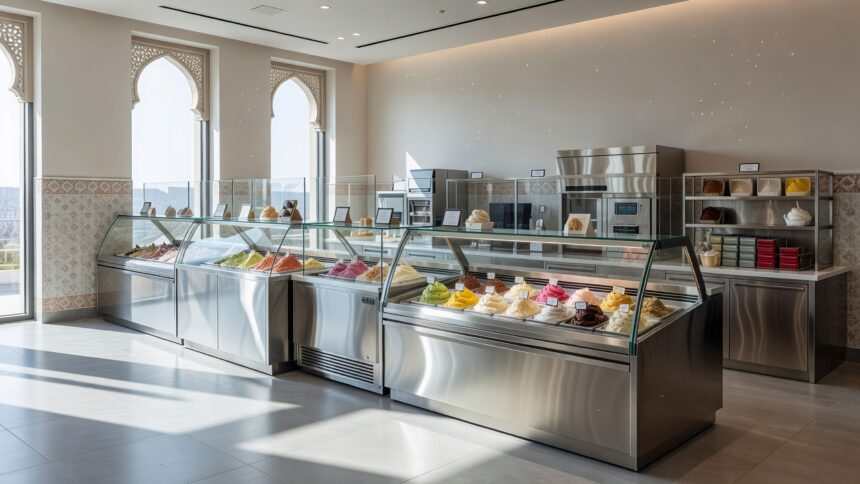
The Ministry of Municipalities and Housing detailed new requirements for ice cream shops that focus on food safety from the moment products arrive through to final service. These cover precise temperature management during receipt storage preparation and presentation in line with rules set by the Saudi Food and Drug Authority. The provisions also require full disclosure of allergens to help protect consumers and enforce hygiene plus sterilization steps at every stage to maintain product integrity.
Staff at these outlets must obtain current health certificates and follow strict personal hygiene standards including the consistent use of protective clothing. They are required to apply recognized food safety practices throughout their work to reduce any chance of contamination. The ministry outlined these personnel rules as essential elements in the overall effort to raise operational standards nationwide.
The revised framework specifies conditions for obtaining licenses suitable shop locations and necessary equipment while incorporating the Saudi Building Code accessibility criteria and fire safety measures. It further addresses the design of commercial facades signage and other technical features needed to run such businesses lawfully. According to the ministry the clarifications will make it easier for investors and operators to understand and meet municipal and technical obligations.
Premises must now offer electronic payment facilities and display a standardized QR code as part of routine compliance. Additional rules govern maintenance cleaning waste management and the physical division of areas used for preparation storage and service. The ministry stated that these specifications create better conditions for safe handling and support consistent quality across the sector.
A MarkNtel Advisors assessment found that the Saudi ice cream market stands at 0.705 billion U.S. dollars in 2026 and is projected to reach 1.17 billion dollars by 2032 with a compound annual growth rate of 7.57 percent. This expansion occurs alongside the regulatory changes that seek to align commercial activity with heightened safety expectations. The ministry noted that the updates help organize the activity while improving the level of service provided to the public.
The regulations were originally issued on September 29 2026 according to the ministry’s official records and publicized on October 4 through statements carried by the Saudi Press Agency. They build on prior adjustments to food retail rules and reflect ongoing coordination with the Saudi Food and Drug Authority on best practices. Local authorities will communicate specific compliance schedules to existing operators to facilitate a smooth transition.