ع



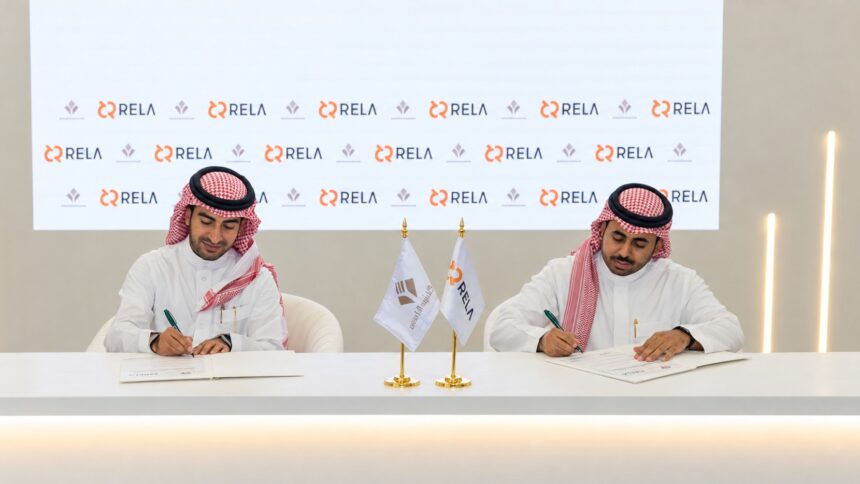
Rela’s new investment and SATCO agreement put the accommodation operator alongside a wider pipeline of purpose-built housing for Saudi Arabia’s workforce.
Saudi Arabia’s workforce accommodation sector is drawing investment into both new residential complexes and the companies that manage them. Rela’s recently announced backing from Yazeed Al Rajhi & Brothers Holding adds an operating business to that picture, alongside larger developments planned by institutional investors.
The Saudi startup secured an undisclosed investment from the holding company, which has joined as a strategic partner, according to the announcement reported on 28 September. Rela began operating earlier in 2026 under Salman Aljebreen. The value of the transaction and the stake acquired were not disclosed.
The deal concerns more than property listings. Rela intends to expand a network of accommodation that it helps prepare, manage and operate, linking property owners with corporate customers. That places it between the owners of buildings and the employers responsible for housing teams across different worksites.
A corporate agreement alongside the investment
Rela has also announced an accommodation partnership with Saudi Arabian Trading & Construction Company, known as SATCO. In its public company update, Rela said the agreement was signed at the SFMA exhibition on 21 September 2026 and covers support for SATCO’s accommodation requirements across different Saudi cities and regions.
The announcement gives the expansion plans a named corporate counterpart. It does not specify the number of beds, contract value or duration. Those details would establish the agreement’s financial scale; the disclosed scope instead identifies the work as the provision, management and operation of workforce accommodation.
There are two distinct relationships here. An investor backs the operating company, while a corporate accommodation agreement concerns the service it will provide. For a property owner considering this market, that distinction matters: capital raised by an operator and revenue contracted against a particular building are different measures of activity.
Rela’s stated expansion approach is to bring additional buildings and residential complexes into its network with owners, developers and investors. Its announced remit spans construction, logistics, industry, hospitality and other employers, placing the business across several sources of accommodation demand.
Purpose-built projects establish another route
Elsewhere in the sector, investment is being organised around individual developments. In February, Smart Accommodation for Residential Complexes Company, or sarcc, a Public Investment Fund company, announced non-binding heads of terms with MAWREF for a proposed 12,000-bed worker accommodation project in north Riyadh.
The proposal covers approximately 120,000 square metres of land and 150,000 square metres of built-up space. Its estimated development cost is SAR669 million, with the first phase of operations expected in the first quarter of 2029. These are plans and estimates attached to a preliminary agreement, rather than completed accommodation already available to employers.
A separate sarcc agreement with Tamimi Global, also announced in February, envisages a 4,000-bed staff accommodation project in north Riyadh. That proposal has an estimated development cost of SAR1.52 billion and likewise targets first-phase operations in early 2029.
The two proposals illustrate why bed counts alone cannot describe this market. The smaller-capacity staff project carries the larger development budget, while its planned built-up area is also greater, at 201,000 square metres. Different accommodation formats have different space and investment requirements. Combining their figures into a single standard cost per worker would obscure those differences.
Hotel expansion adds a separate source of demand
Construction sites are one part of the accommodation picture. The hotels, logistics facilities and other businesses that operate after projects open also require staff. That makes the distinction between temporary project work and continuing employment relevant when assessing where housing will be needed and for how long.
In a February 2026 assessment, property consultancy Knight Frank identified around 94,500 Saudi hotel rooms under construction or at advanced planning stages. It put the existing hotel stock at 171,650 rooms and expected the luxury segment to account for 75% of new supply.
Those figures describe guest accommodation, not employee beds. They cannot be converted directly into a workforce housing forecast without information on staffing, recruitment locations and employers’ accommodation arrangements. They nevertheless show why the sector’s potential customer base extends beyond contractors building new projects.
The operational implication is that accommodation demand can change as a development moves from construction into use. A housing commitment for a building programme and one serving an operating hotel need not have the same duration, location or resident profile. The announced project pipeline makes those distinctions consequential for investors assessing individual properties.
Licensing gives the market a formal structure
Saudi Arabia’s collective housing system also treats accommodation as a regulated use of property. The official Balady licensing service allows owners and tenants to apply for a collective housing licence covering health, technical and safety requirements.
The published process includes submission of an application and municipal verification that the location meets spatial requirements. This makes the suitability of the property itself part of the accommodation decision. A building’s availability and a company’s need for rooms do not, by themselves, describe the full process of bringing housing into operation.
Rela’s next announced step is to expand the properties in its network, while the sarcc proposals illustrate the longer timetable for new purpose-built supply. Read together, the developments point to two parallel routes: operating accommodation through networks of properties and investing in new residential complexes. Their contribution to Saudi workforce housing will become tangible as properties open and contracted beds enter service.