ع




A September funding round and a new SAMA banking forum point to the practical work behind bringing connected financial services to Saudi customers.
Sav’s plans to expand into Saudi Arabia are arriving at a moment when the Kingdom’s open banking agenda is moving beyond the availability of account data towards more practical questions about payments, service quality and coordination between banks and financial technology companies.
The UAE-based consumer fintech announced a $3.5 million pre-Series A round in September, led by Abu Dhabi-based Phoenix Venture Partners. Saudi market expansion is a stated use of the money, alongside product development and investment in its artificial intelligence infrastructure.
Later that month, the Saudi Central Bank convened banking-sector representatives to discuss the next phase of open banking. Together, the developments show the two sides of the market taking shape: investors backing consumer applications and banks preparing the infrastructure on which those applications depend. They do not establish that Sav has launched its full service in the Kingdom.
Capital for an intended Saudi entry
Founded by Purvi Munot and Mithil Ajmera, Sav combines different parts of personal financial management within one platform. The September announcement put its total funding at approximately $6 million, including earlier rounds of around $2.5 million. Co-investors drawn from Phoenix Venture Partners’ investor base also participated.
The company describes Saudi Arabia as a strategic growth market. That is a forward-looking statement about where it intends to build, rather than a disclosure of Saudi customer numbers or revenue. The announcement does not provide a Saudi launch date, a country-level adoption figure or evidence that every product available in the UAE will be offered on identical terms.
For a business managing financial relationships, geography is more than a language setting. The institutions holding customers’ money, the permissions governing access to information and the parties delivering each regulated service all matter. A regional brand can offer a familiar interface while the underlying arrangements differ by market. The funding gives Sav resources to pursue expansion; those local arrangements determine what expansion means in practice.
Saudi banks prepare for the next stage
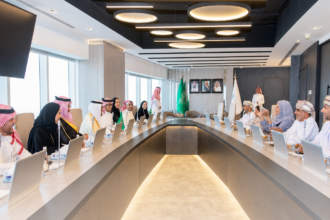
SAMA’s 16 September Open Banking Forum, held alongside Money20/20 Middle East, focused on banks’ readiness for payment initiation, broader business use and the consistency of customer experience. Its account also emphasised coordination between banks and fintech companies.
The discussion matters because displaying information and initiating a transaction are different functions. A consolidated view can help someone understand balances across accounts. A service that initiates a payment must also handle the steps that authorise and execute an instruction. Moving from one function to the other changes the practical consequences of a failed connection or an unclear permission.
The framework has developed in stages. SAMA’s second open banking release in September 2024 focused on payment initiation services, following work on account information. The September 2026 forum is therefore part of a continuing implementation process, not the first introduction of the concept.
For consumers, the important outcome is whether connections work consistently across institutions. A service can have an attractive front end while still depending on the availability and quality of the bank connections behind it. SAMA’s focus on reliability places those implementation questions alongside innovation, rather than treating the existence of a framework as the end of the work.
One interface does not mean one institution
Sav’s current corporate disclosures identify Sav Technologies Limited as a DIFC company regulated by the Dubai Financial Services Authority. They describe Category 4 permissions covering specified advisory and arranging activities, with a retail-client endorsement. Those UAE disclosures should be read in their own jurisdictional context; they are not evidence of a Saudi authorisation.
This is an important distinction in a market where an app may bring several financial products together. The company providing the interface may not be the institution issuing a card, holding an account or providing an investment product. The legal and commercial roles remain distinct even when the customer moves between them within one application.
In an April 2025 article, Munot argued that financial relationships were becoming less tied to a single bank and more dependent on how products connect. That is the founder’s interpretation of the opportunity, not an independent measurement of customer loyalty. It helps explain the company’s direction without establishing that most Saudi customers already behave that way.
Her argument also highlights a tension for connected-finance businesses. Bringing information together creates a broader view, but a broad view alone does not demonstrate better outcomes. Fees, product suitability, the completeness of connected data and the boundaries of automated actions remain separate questions. A funding announcement does not answer them.
Consent is part of the service
The UAE Central Bank’s open finance announcement describes a system for data sharing and transaction initiation built around consumer consent. Although it concerns a different jurisdiction, it illustrates the practical foundation underlying the regional category: connecting financial services requires permission, not merely technical access.
That makes the design of an automated service consequential. Seeing financial information, proposing an action and executing it are separate steps. Customers need to understand which of those steps they have authorised, especially where several providers are involved. The promise of convenience does not remove the need to identify who is responsible for each part of the service.
Sav’s next Saudi milestone will consequently be more specific than another regional growth statement. It will be the disclosure of the actual local service, its operating partners and the activities available to customers. September’s financing and SAMA’s banking discussions establish a timely setting for that next step, while leaving the launch itself to be demonstrated.