ع



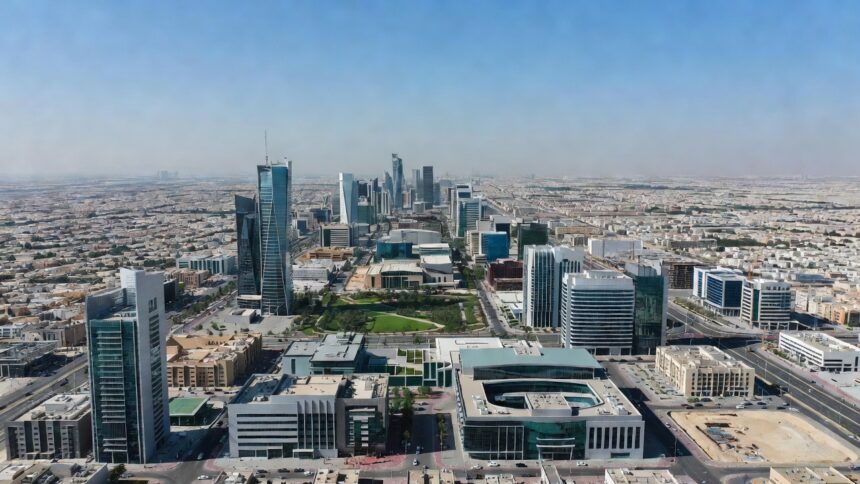
The World Intellectual Property Organization identified Riyadh as the 92nd largest innovation cluster globally in its 2026 assessment, which maps concentrations of patenting, scientific publishing and venture capital activity across defined geographic areas that often cross administrative boundaries. This entry represents Saudi Arabia’s first appearance in the top 100, following a 101st place finish the previous year. WIPO noted that two clusters joined the ranking this year, with Riyadh accompanied by Fuzhou in China at 96th, while Salt Lake City and Ann Arbor in the United States exited the list.
According to the index, Riyadh’s position draws on strong contributions from both corporate and academic players, with SABIC Global Technologies serving as the leading international patent applicant under the Patent Cooperation Treaty and King Saud University heading scientific publications. The cluster recorded 419 venture capital deals tied to innovation along with 162 international patent applications, figures that underscore expanding research and startup ecosystems in the capital. Saudi Arabia’s Research, Development and Innovation Authority highlighted these metrics as key drivers behind the improved standing.
No other Gulf city featured among the top 100 innovation clusters, a list dominated by Asia-Pacific with 36 entries, Europe with 30 and Northern America with 23. Cairo in Egypt placed 86th to become the sole African representative and the highest-ranked Arab cluster. The WIPO report indicated that middle-income economies now host 11 of the top 100 clusters, including those in Brazil, Egypt, Iran, Malaysia, Mexico, Saudi Arabia and Türkiye.
Shenzhen-Hong Kong-Guangzhou in China retained the top spot, followed by Tokyo-Yokohama in Japan and San Jose-San Francisco in the United States, with Paris entering the top 10 at 10th place this year. The global innovation landscape continues to broaden, as the report reflects the widening reach across regions and income levels. Paris joining London as the second European cluster in the leading group further illustrates shifting dynamics.
The development aligns with Saudi Arabia’s push to build a knowledge-based economy through initiatives focused on research, development and innovation. Institutions such as Princess Nourah bint Abdulrahman University, Prince Sultan University, and companies including Aramco have also played significant roles in bolstering the cluster’s output. WIPO’s data-driven methodology, which ignores political borders to focus on actual densities of inventors, authors and investors, provides a robust measure of where innovation is truly concentrated.