ع



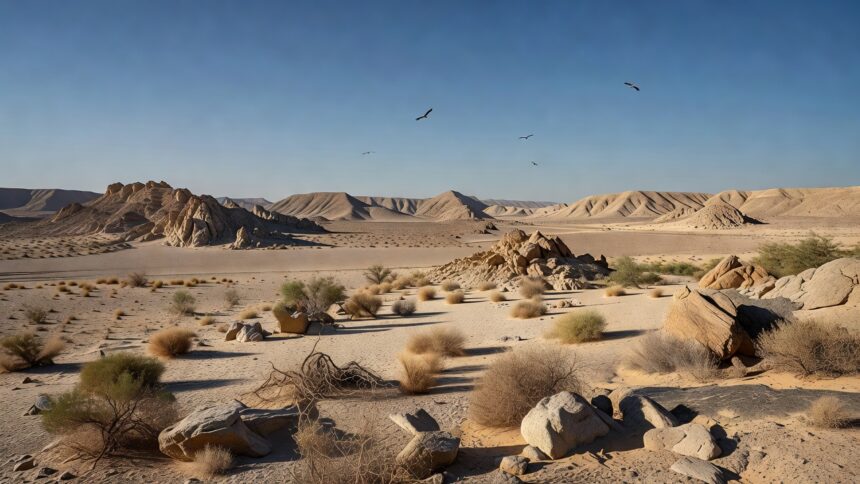
The National Center for Wildlife announced on Sunday the launch of Saudi Arabia’s first internationally accredited national guide for vulture feeding stations, which seeks to protect both resident and migratory vultures by minimizing exposure to one of their primary threats. Developed in cooperation with five specialized international organizations, the document incorporates global best practices in vulture and raptor conservation while adapting them to the environmental and logistical realities of the kingdom’s arid regions. The center’s initiative addresses poisoning risks that have undermined population sustainability, establishing a framework for controlled food sources that support survival and reproduction.
Feeding stations, commonly known as vulture restaurants, will supply safe and non-contaminated carrion to reduce reliance on potentially toxic sources such as veterinary drugs or pollutants, according to the NCW announcement. These sites are positioned to serve migratory vultures that traverse Saudi Arabia along established seasonal routes, offering reliable stopover resources before the birds continue onward. The approach aligns with broader efforts to maintain ecological balance in regions where vultures play a critical role as scavengers.
Technical specifications in the guide cover every aspect of station management, from careful site selection that accounts for vulture behavior and habitat needs to protocols for sourcing uncontaminated food. Operating procedures emphasize regular monitoring of visitor numbers and documented behavioral observations to refine future practices, the National Center for Wildlife reported. Such structured implementation aims to create sustainable facilities that operate effectively within Saudi environmental conditions.
BirdLife International has reported that vultures rank among the most threatened bird families worldwide, with some species in Africa and the Indian subcontinent experiencing declines exceeding 95 percent in recent decades largely due to poisoning and persecution. These losses disrupt food webs and ecosystem services, including natural carcass disposal that can otherwise lead to disease spread or increased costs for carcass management. In Saudi Arabia and the Middle East, significant vulture population drops have been documented through studies by the Saudi Wildlife Authority, underscoring the need for targeted interventions like the new guide.
Earlier conservation programs in the kingdom have included monitoring at protected areas such as Mahazat as-Sayd, where researchers have recorded aggregations of Egyptian vultures and maintained populations of lappet-faced vultures. Satellite tracking by the Prince Mohammed bin Salman Royal Reserve has revealed extensive movements by Eurasian griffon vultures, with two tagged individuals covering more than 245,000 kilometers across eight countries over 29 months, highlighting the importance of cross-border cooperation for migratory species. The NCW guide builds on these foundations by providing standardized tools for feeding stations, a practice that originated in South Africa in 1966 and has since been adopted in multiple countries to combat food shortages and contamination.
The National Center for Wildlife continues to advance wildlife conservation through research, protected area management and community engagement, with the vulture guide representing a measurable step toward preserving biodiversity in the kingdom. By focusing on safe feeding infrastructure and ongoing data collection, the document equips stakeholders to support vulture populations amid regional migration patterns and local environmental pressures. Implementation of the guide is expected to yield improved monitoring data that can inform future adjustments to conservation strategies across Saudi habitats.