
 ع
ع


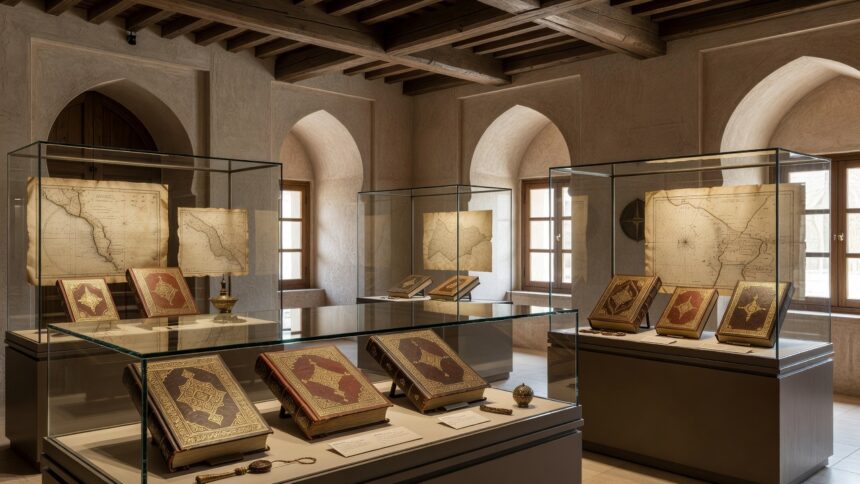
The Saudi Press Agency reported that the specialized pavilion at the Red Sea Museum displays illuminated copies of the Holy Quran from multiple historical periods, including 17th-century Chinese examples, 19th-century Kashmiri texts and a compact Ottoman edition. These pieces feature intricate gold decorations, refined calligraphy and high-quality bindings that demonstrate the precision of historical manuscript production. The agency added that the collection further includes Islamic scholarly works, accounts of the Prophet’s biography and poems of praise that once traveled with pilgrims.
According to the Saudi Press Agency a standout 1506 manuscript illustrates scenes from the Two Holy Mosques and ranks among the most significant historical records of the Hajj. The pavilion also holds navigational maps and religious artifacts linked to maritime journeys across the Red Sea to Makkah. Such items underscore the sea route’s role as a vital corridor for pilgrims from Asia and Africa in the centuries before air travel.
The Red Sea Museum occupies the restored Bab Al-Bunt building in Jeddah’s Al-Balad historic district, a setting selected to highlight the area’s maritime heritage in trade, navigation and pilgrimage. Local heritage records place the museum’s establishment within broader initiatives to revive and interpret Jeddah’s pre-oil identity as a port city. Its permanent collections trace the interplay of seafaring, commerce and faith that shaped the region’s development for hundreds of years.
SPA noted that the exhibition documents both the spiritual commitment and the practical challenges faced by millions of pilgrims who sailed the Red Sea route. Manuscripts in the display served devotional needs while maps offered guidance through treacherous waters and ports. The pavilion therefore connects modern visitors to a layered legacy of cultural exchange and religious continuity.
The Saudi Press Agency indicated that the display traces the evolution of Quranic calligraphy, ornamentation and bookbinding across eras, enriching the visitor experience. Historic Jeddah itself received UNESCO World Heritage designation in 2014 for its architectural and cultural significance, providing a fitting backdrop for the museum. Additional artifacts on view further illustrate the fusion of art, exploration and devotion that defined these ancient sea passages.