
 ع
ع


The Gulf Cooperation Council and the Arab Parliament led widespread condemnation of the attempted unmanned aerial vehicle assaults, describing them as a dangerous escalation that threatens security across the region. GCC Secretary-General Jasem Albudaiwi stated that the strikes originated from Iran-backed militias operating in Iraq, according to the organization’s official response. The GCC reaffirmed its complete solidarity with Saudi Arabia and backed every step the kingdom takes to defend its security, sovereignty and territorial integrity while urging swift control of all weapons under the Iraqi state to stop similar violations.
Bahrain’s Foreign Ministry issued one of the strongest rebukes, terming the drone strikes a flagrant violation of international law, the UN Charter and Security Council Resolution 2817 that endangers energy supplies and de-escalation efforts. The ministry emphasized that Saudi Arabia’s security forms an integral part of Bahrain’s own national security and that of the broader Gulf area. It called for decisive action to prevent Iraqi territory from being exploited for cross-border attacks, a position that aligns with earlier GCC appeals for stability.
Kuwait, Qatar and the United Arab Emirates echoed the same concerns in coordinated statements released on the day of the incident. Kuwait described the assaults as a blatant breach of Saudi sovereignty and international norms, stressing that the kingdom’s security cannot be separated from that of fellow GCC members. Qatar highlighted violations of good-neighborliness principles while the UAE focused on the direct threat to Saudi stability, with all three governments pledging full support for any legitimate defensive measures Riyadh might adopt.
Egypt, Oman, Libya and the Palestinian leadership added their voices to the unified Arab position, each framing the attacks as destabilizing to the wider region. The Egyptian Foreign Ministry rejected all such strikes against Saudi or other Arab targets and demanded they cease immediately, renewing Cairo’s backing for Saudi efforts to preserve security. Oman’s statement underlined the need to halt actions that undermine regional stability, Libya warned of risks to global energy security from attacks on civilian infrastructure, and Palestine reaffirmed its opposition to any aggression against Saudi sovereignty.
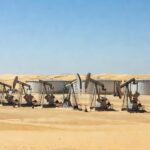
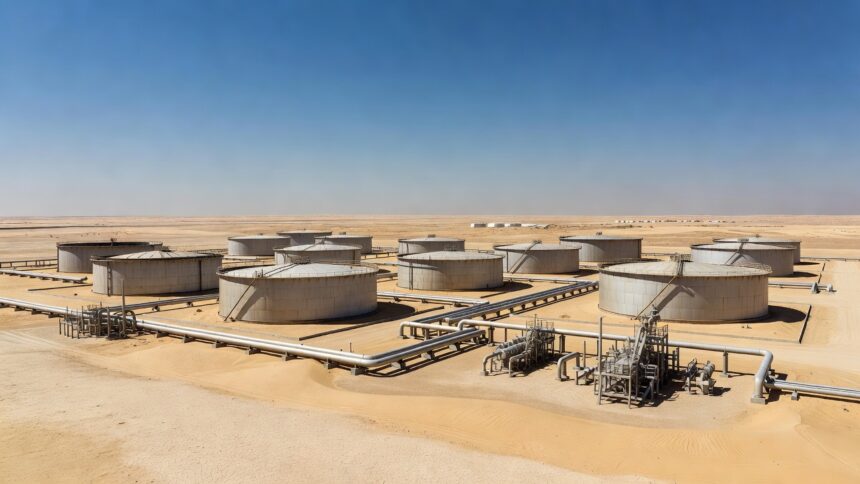
The attempted strikes targeted vital oil installations in Saudi Arabia’s Eastern Province, home to key production sites, as well as facilities near Riyadh, according to details shared in the diplomatic responses. Officials across the statements traced the drones to Iranian-backed groups inside Iraq, marking a continuation of patterns seen in past incidents that have disrupted energy flows. A 2019 assessment by the International Energy Agency noted that similar assaults on Abqaiq and Khurais facilities had briefly cut Saudi output by 5.7 million barrels per day, equivalent to more than five percent of global supply at the time.
Saudi Arabia maintains its role as the world’s leading oil exporter, with the Eastern Province central to output that averaged over 10 million barrels daily in recent years per OPEC data. The latest condemnations come against a backdrop of repeated calls for de-escalation and respect for state sovereignty under international law. All issuing bodies stressed that threats to Saudi energy assets carry direct implications for Arab and global security alike.