ع



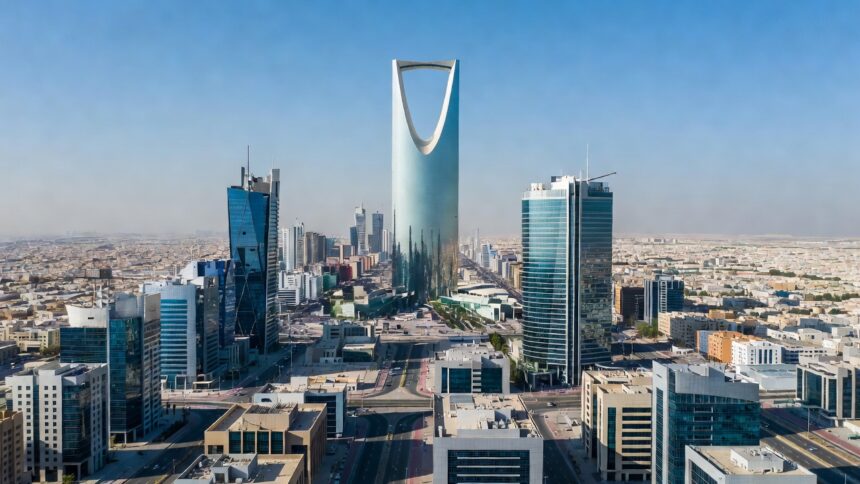
International Monetary Fund Managing Director Kristalina Georgieva issued the warning on Wednesday at a news conference on the sidelines of the IMF and World Bank annual meetings in Bangkok. Recent fighting between a Saudi-led coalition and Yemen’s Houthis has included missile strikes on airports and energy facilities in the kingdom, an escalation that began with an attack on Riyadh’s international airport over the weekend. That assault left 13 people dead and suspended airport operations in the most serious incident of its kind since 2015, according to an AFP report.
“The Saudi economy is important for the region and the world,” Georgieva stated. “In that sense, these developments have potentially negative spillovers for everybody, everywhere.” The IMF chief delivered the assessment as crude prices have climbed sharply following disruptions that included Iran’s effective closure of the Strait of Hormuz after attacks by the United States and Israel in February.
The IMF released its World Economic Outlook on Tuesday and lifted the global growth forecast for 2026 by 0.1 percentage points to 3.1 percent, IMF data shows. The outlook projects a 0.3 percent contraction this year for economies across the Middle East and Central Asia before expansion accelerates to 6.3 percent in 2027 as disruptions ease. For Saudi Arabia the fund raised its 2027 growth projection to 7.9 percent from 2.4 percent in its July forecast.
Georgieva urged governments to make urgent repairs to their fiscal positions before problems intensify further. She called for steps to enhance revenues, rationalise spending and strengthen public financial management to address rising debt burdens. An IMF assessment found that average government debt servicing costs have doubled from around 6 percent to 14 percent of revenues over the past decade in many countries.
Saudi Arabia’s economic reforms in recent years have built important buffers that are now helping the kingdom and the wider Gulf region absorb current shocks, Georgieva noted. Non-oil growth has exceeded expansion in the hydrocarbon sector both before and during the latest tensions, supporting broader economic resilience. The managing director expressed sympathy for Saudi authorities and citizens over the human losses sustained in the recent attacks.
Broader conflict in the energy-rich region has placed additional strain on global supply chains, shipping routes and commodity markets with effects that extend to food security and industrial activity. Georgieva highlighted how these pressures test the limits of global economic resilience at a time when artificial intelligence gains have not offset challenges for poorer nations. The gathering of officials and experts in Bangkok continues to examine these interconnected risks alongside policy options for rebalancing major economies including China, the United States and Europe.