
 ع
ع


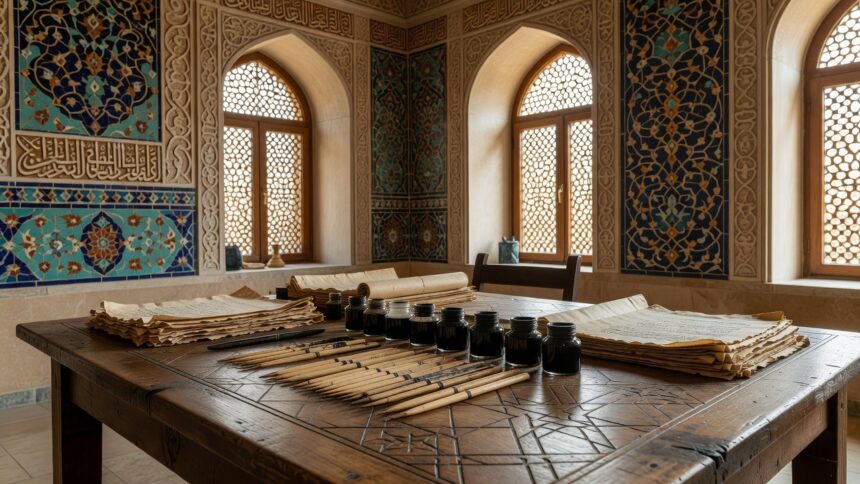
The Center of Islamic Civilization in Uzbekistan announced an international calligraphy competition to create a unique handwritten copy of the Quran that merges distinctive styles from various countries and schools of Islamic art. Habibullo Solih, head of the center’s calligraphy school, presented the associated project titled Quran of the World: From the Tradition of Calligraphy to the Heritage of the Future during the event. The competition invites calligraphers from around the world to contribute to a single manuscript that reflects the richness and historical significance of Arabic calligraphy in transcribing the Quran over centuries, according to the center. Organizers expect the resulting work to serve as both an artistic achievement and a bridge to future cultural heritage.
The announcement formed part of the International Media Forum held in Tashkent under the theme Islamic Civilization: A New Perspective and New Discoveries. The gathering featured a panel on the media’s role in countering stereotypes and Islamophobia with delegates from the Organization of Islamic Cooperation along with representatives from Algeria, Oman, Pakistan, Saudi Arabia, Iraq, Mali and Uzbekistan. Forum sessions also reviewed multiple cultural and scientific projects linked to the Quran, ancient manuscripts and Islamic heritage preservation, the center reported.
The calligraphy competition builds on earlier decisions by a council at the center to establish an International School of Calligraphy following an initiative from President Shavkat Mirziyoyev. That school aims to revive local traditions, extend their reach internationally and transmit them to coming generations through programs in education, exhibitions, manuscript copying, restoration, bookbinding, academic research and tourism. Renowned figures including Shaykh Abdulaziz Mansur, Habibulloh Solih and Abdurazzoq Domla collaborated on the school’s charter, methodological manuals and textbooks, according to center documentation.
Under the approved framework, the competition will designate 114 calligraphers to copy the Quran of New Uzbekistan while related projects include producing a complete version in the Nasx-i Bukhari script invented by Mir Ubayd Bukhari. The center additionally outlined plans to reconstruct missing pages of the Mushaf of Caliph Uthman for a full replica and to explore artificial intelligence applications in deciphering ancient manuscripts. These elements were showcased alongside the competition details at the forum, the organizers stated.
Further presentations at the event covered the concepts behind 114 Qurans representing 114 masterpieces of calligraphy from the Islamic world and an examination of the Qatallanqar Quran distinguishing established facts from associated legends. The center’s initiatives align with a July cooperation agreement signed with ICESCO and several international cultural institutions to advance the calligraphy competition together with a broader Manuscript Quran Initiative. Uzbekistan has also strengthened its crafts profile after Samarkand received certification as a World City of Craftsmen from the World Council of Crafts, local reports indicated.
The International School of Calligraphy will maintain a dedicated library collecting ancient manuals, treatises and methodological guides to support its multifaceted work. Council members unanimously endorsed the full set of proposals with one participant noting the importance of incorporating national ornamentation into book designs. Such coordinated steps demonstrate the center’s structured approach to both safeguarding and reinterpreting Islamic cultural assets through contemporary methods.