

 ع
ع


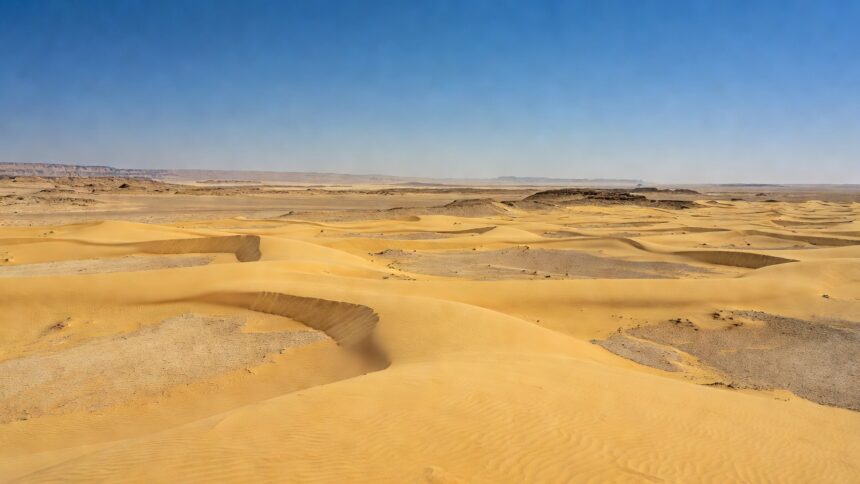
The National Center for Meteorology analysis of the 1991-2020 climate baseline placed September as the fourth-hottest month across Saudi Arabia with an average temperature of 30.8 degrees Celsius, an average maximum of 38.3 degrees and an average minimum of 23.27 degrees. The NCM data showed that temperatures tend to peak in the western and eastern regions of the kingdom while the southwestern highlands record the lowest readings during the month. Long-term records maintained by the center confirm September as one of the hotter months annually alongside the peak summer period.
In the decade spanning 2016 to 2025 the highest average temperature for September occurred in 2023 at 25.46 degrees Celsius while the lowest came in 2016 at 24.21 degrees according to the National Center for Meteorology. Over the longer span from 1985 to 2025 the center recorded the highest average maximum temperature in 2023 at 39.57 degrees with the lowest in 2021 at 37.92 degrees. These yearly fluctuations occur within the broader pattern of late-summer heat that the NCM has tracked through its climatological assessments.
The National Center for Meteorology data identified Makkah and Rafha as tying for the highest recorded September temperature at 49.4 degrees Celsius with readings registered in 1988 and 2019 respectively. Stations in Al-Qaisumah, Al-Ahsa and Makkah average five days per September with maximum temperatures reaching or exceeding 45 degrees the center reported. Such extremes form part of the intensity that characterises heat patterns in multiple regions as the NCM review details.
According to the National Center for Meteorology September normally receives average rainfall of just 1.64 millimetres making it the second-driest month of the year. The center’s figures list the highest station totals during the baseline period at 9.9 millimetres in Makkah and 9.1 millimetres in Taif. Precipitation remains concentrated in southern and southwestern areas with notable year-to-year variation shown in the NCM records.
A parallel National Center for Meteorology review identified July as the hottest month with an average temperature of 33.1 degrees Celsius and an average maximum of 40.3 degrees under the same 1991-2020 norms. The Ministry of Environment Water and Agriculture describes autumn seasonal temperatures which encompass September as ranging from 25 to 35 degrees Celsius. These patterns fit within the arid climate profile that official Saudi meteorological records have consistently documented.
The World Bank Climate Knowledge Portal drawing on CRU data has noted a clear warming signal in Saudi Arabia temperature records particularly from the late 20th century amid variability linked to phenomena such as El Niño. Analysis covering the period from 1979 to 2019 has documented long-term temperature increases and more frequent extreme heat events throughout the kingdom. Such trends provide wider context for the monthly baselines that the National Center for Meteorology continues to publish.