
 ع
ع


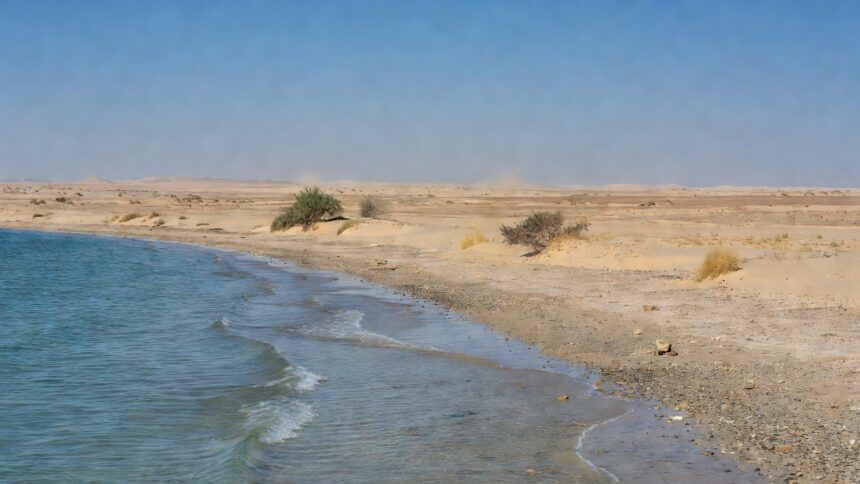
The National Center for Meteorology forecast active surface winds that stir up dust and sand across much of the Kingdom’s western coast beginning Tuesday and continuing through the end of the week, with the conditions also generating high waves along affected shorelines. According to the center, the winds will reduce visibility in some locations while the associated waves pose risks to coastal activities. The National Center for Meteorology, which hosts the Gulf Cooperation Council Regional Node for sand and dust storm monitoring in Jeddah, regularly issues such alerts to help residents and travelers prepare for shifting weather patterns in the arid environment.
Coastal stretches of the Makkah and Madinah regions along with parts of Asir and Jazan will see the strongest effects from the dust-stirring winds, the National Center for Meteorology assessment found, particularly along connecting highways where blowing sand can accumulate quickly. The center’s forecast map highlights these areas as facing the greatest exposure through Saturday, with conditions that may intensify during peak daytime hours. High waves are expected to coincide with the wind activity, adding complications for maritime operations and shoreline communities in the Red Sea zone.
A World Meteorological Organization bulletin on sand and dust storms has highlighted how such events in the region can lead to sharp drops in horizontal visibility, disrupting road travel and increasing accident risks on highways that link major western cities. The National Center for Meteorology has documented that dust particles stirred by these winds often trigger respiratory issues, eye irritation and skin allergies among exposed populations. Past episodes tracked by the center have shown how infrastructure including solar panels, power lines and transportation networks can suffer reduced efficiency when dust loads build up over several days.
Studies compiled by the National Center for Meteorology’s Sand and Dust Storm Regional Center indicate that Saudi Arabia experiences frequent dust activity due to its vast desert expanses, limited vegetation and extreme climate conditions, factors that amplify the impact of surface winds. A 2025 World Meteorological Organization report noted that while some periods have seen reduced dust storm frequency compared with long-term averages, events like the current forecast still carry significant health and economic costs across West Asia. The center’s ongoing research examines effects on food security through impacts on agriculture as well as broader consequences for human health and built environments.
The National Center for Meteorology maintains a network of observation stations and modeling tools to track these weather systems, allowing it to provide several days’ advance notice of dust-raising winds and wave surges along the western coast. In its latest announcement, the center emphasized the importance of checking real-time reports before undertaking travel in the affected governorates. Regional cooperation through the Jeddah-based node has enhanced forecasting accuracy for dust events that can extend beyond Saudi borders into neighboring Gulf states.
Public advisories from the National Center for Meteorology recommend avoiding unnecessary outdoor exposure during peak wind periods and securing loose objects that could be affected by high waves or reduced visibility. The center’s data places the current pattern within a series of similar summer forecasts that have become more predictable through improved satellite and ground monitoring. Residents in the Makkah, Madinah, Asir and Jazan coastal zones are encouraged to follow updates via the official National Center for Meteorology platforms to stay informed as conditions evolve through the week.