
 ع
ع


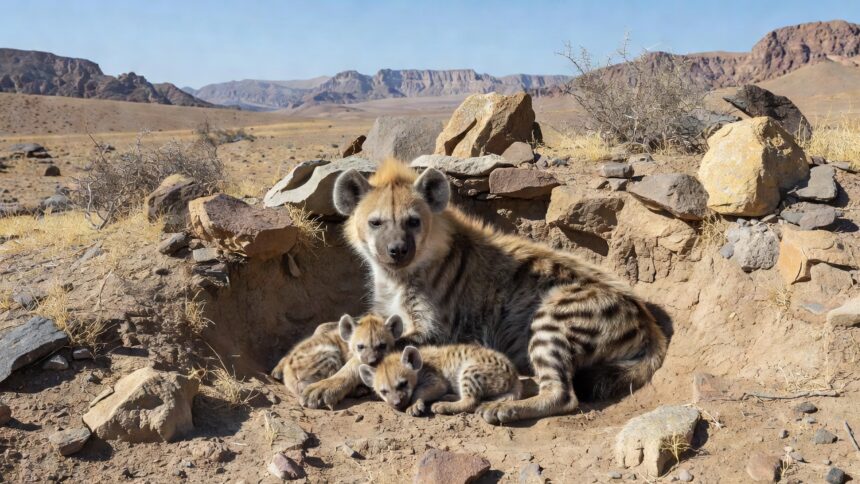
The National Center for Wildlife said in a press statement that two breeding pairs of striped hyenas were reintroduced into the NEOM Nature Reserve after completing a rehabilitation program at an NCW facility. The preparation involved veterinary examinations, ongoing health monitoring and field assessments to ensure the animals could adapt to wild conditions. This birth represents the first recorded instance of the species reproducing in the reserve since the pairs were released, according to the center.
According to the NCW, the event signals successful adaptation and reproduction in the natural habitat. Dr. Mohammed Qurban, CEO of the National Center for Wildlife, stated, “This is the first striped hyena birth following their reintroduction, and it marks an important milestone in the center’s wildlife breeding and reintroduction programs.” Qurban added that reintroducing species into their natural habitats constitutes an advanced stage in establishing populations capable of surviving and reproducing in the wild while restoring their ecological roles.
Striped hyenas contribute to the ecosystem by consuming carcasses and carrion, which helps maintain balance in the environment. Populations of the species have declined due to hunting and poisoning, the NCW reported. A National Geographic assessment that draws on International Union for Conservation of Nature data classifies striped hyenas as near threatened, with a global population estimated between 5,000 and 9,999 individuals that continues to decrease.
The NEOM Nature Reserve forms part of Saudi Arabia’s wider initiatives to protect and restore native biodiversity through targeted reintroduction projects. Collaboration between the NCW and NEOM has emphasized creation of suitable habitats for released animals. A comparable development occurred in 2010 when striped hyena cubs were born on Sir Bani Yas Island in the UAE, according to a Khaleej Times report from that period.
The National Center for Wildlife maintains multiple programs focused on breeding, rehabilitation and release of wildlife across the kingdom. These efforts target species that once inhabited the region but faced pressure from human activities. Data from the center’s ongoing monitoring at NEOM will track the hyena family’s progress as part of broader population recovery objectives.